Jaecoo J5 Test Drive: Range Rover Vibes, Jaecoo Personality



Being likened to a segment heavyweight can seem like a compliment, but it’s also a heavy cross to bear. Expectations skyrocket, the margin for error all but disappears, and if you fall short, you risk being dismissed as nothing more than an imitator.
The Jaecoo J5 has drawn plenty of comments about looking like a Range Rover, and from certain angles you can see why. That resemblance can be flattering, but it also raises the stakes: when people expect Range Rover vibes, there’s very little room to stumble.


So where does the J5 actually stand? Is it more than just a stylish echo of a luxury icon? Let’s take a closer look.
Exterior
The J5 presents a bold, boxy, and minimalist exterior that reflects contemporary EV design trends. At the front, a slim central grille sits just under the bonnet line, adorned with 45-degree slanted textures that give the fascia a technical, almost 3D effect.
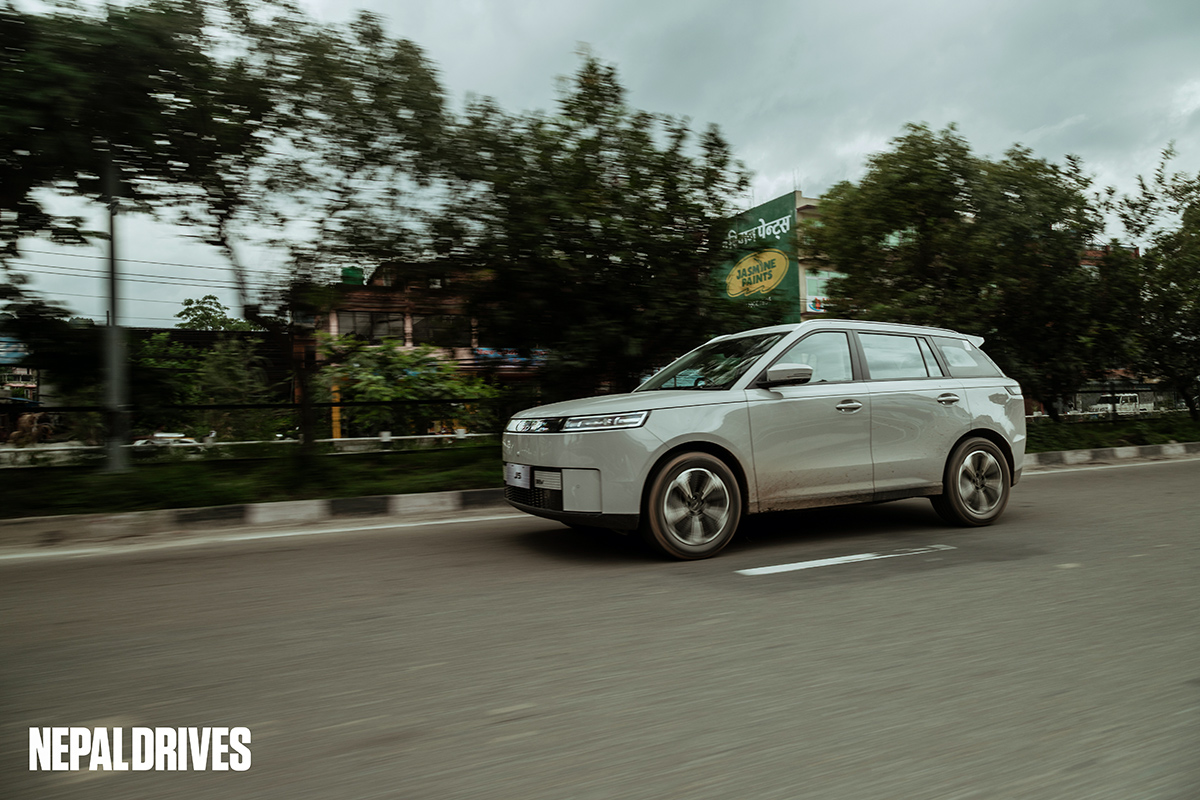
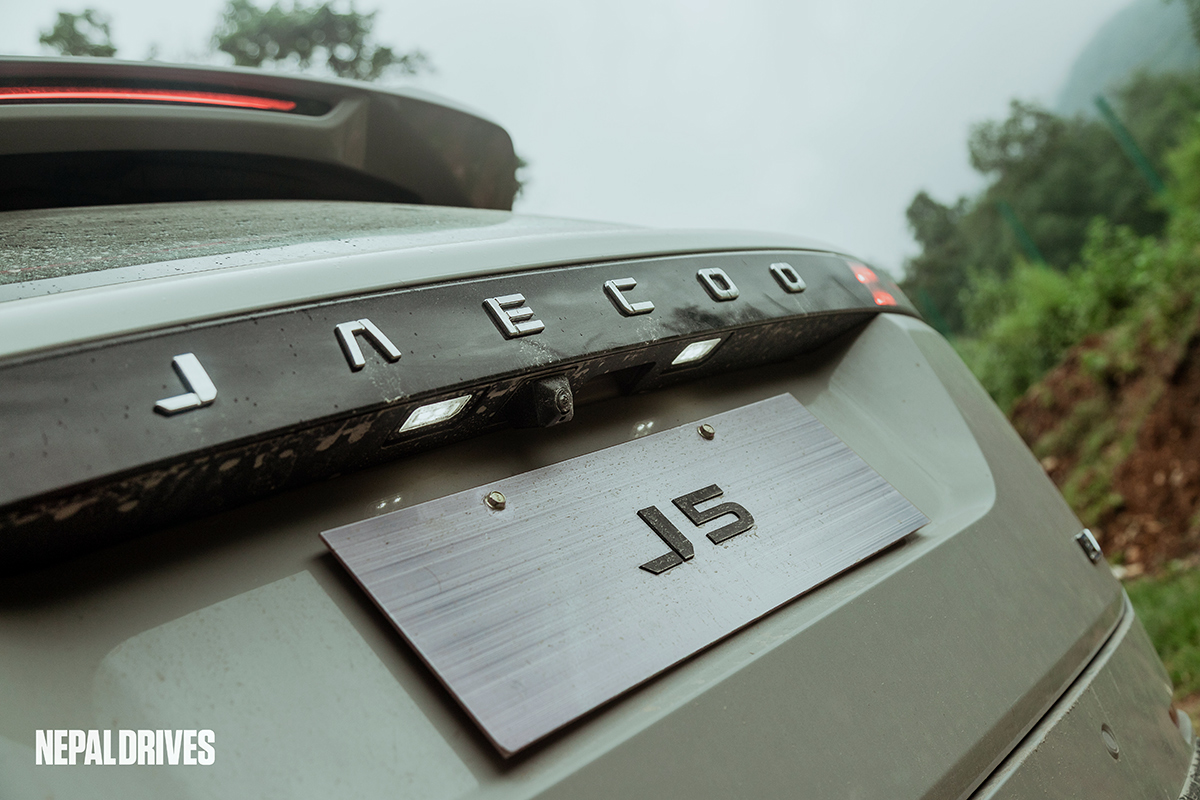
Sleek LED elements merge with the grille to create a wide, unified signature, though the additional patterned lower grille feels slightly busy. The Jaecoo badge sits prominently in the center; I think the badging could have been executed better (especially in the rear), as some elements feel a little tacky.
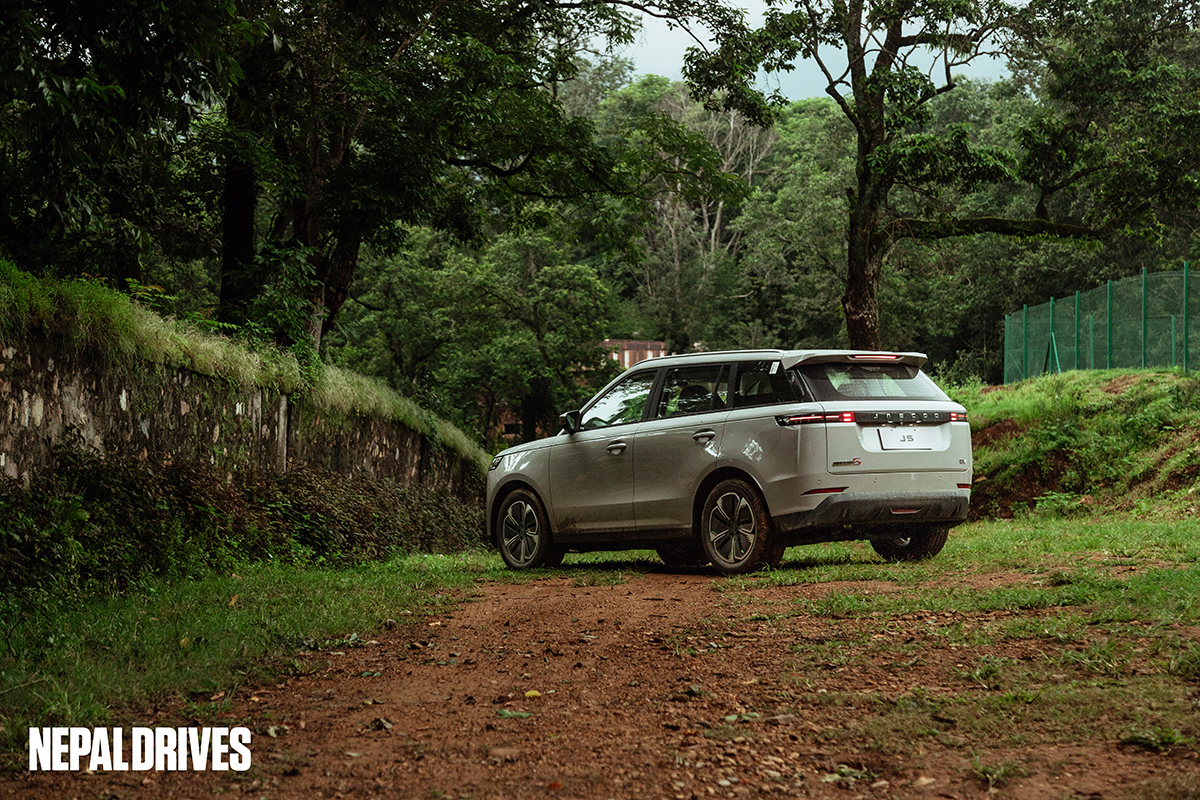
From the side, the J5 features sharp character lines and a slightly pronounced rear haunch, giving it a muscular profile. The C-pillar design stands out, and roof rails enhance the SUV’s utility. The 18-inch alloy wheels are petal-styled with subtle aero-optimization.
At the rear, a connected taillight bar stretches across, with integrated turn indicators and the Jaecoo logo at the center, creating symmetry and a clean, modern finish.
With dimensions of 4,380 mm in length, 1,860 mm in width, and 1,650 mm in height, coupled with a 2,620 mm wheelbase and 185 mm of ground clearance, the J5 is well-sized for Nepal’s roads. The clearance allows it to tackle obstacles, though without all-wheel drive or high-grip tyres, slippery surfaces can be challenging.
Interior and Features
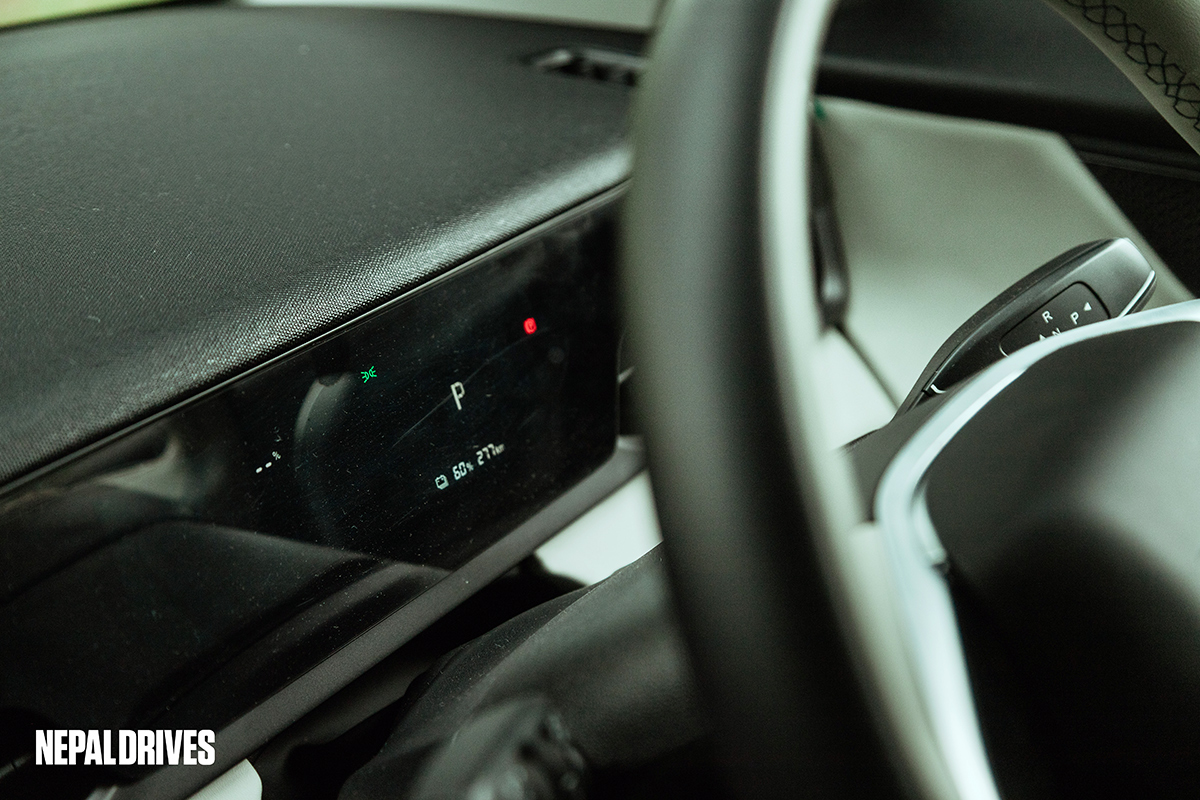
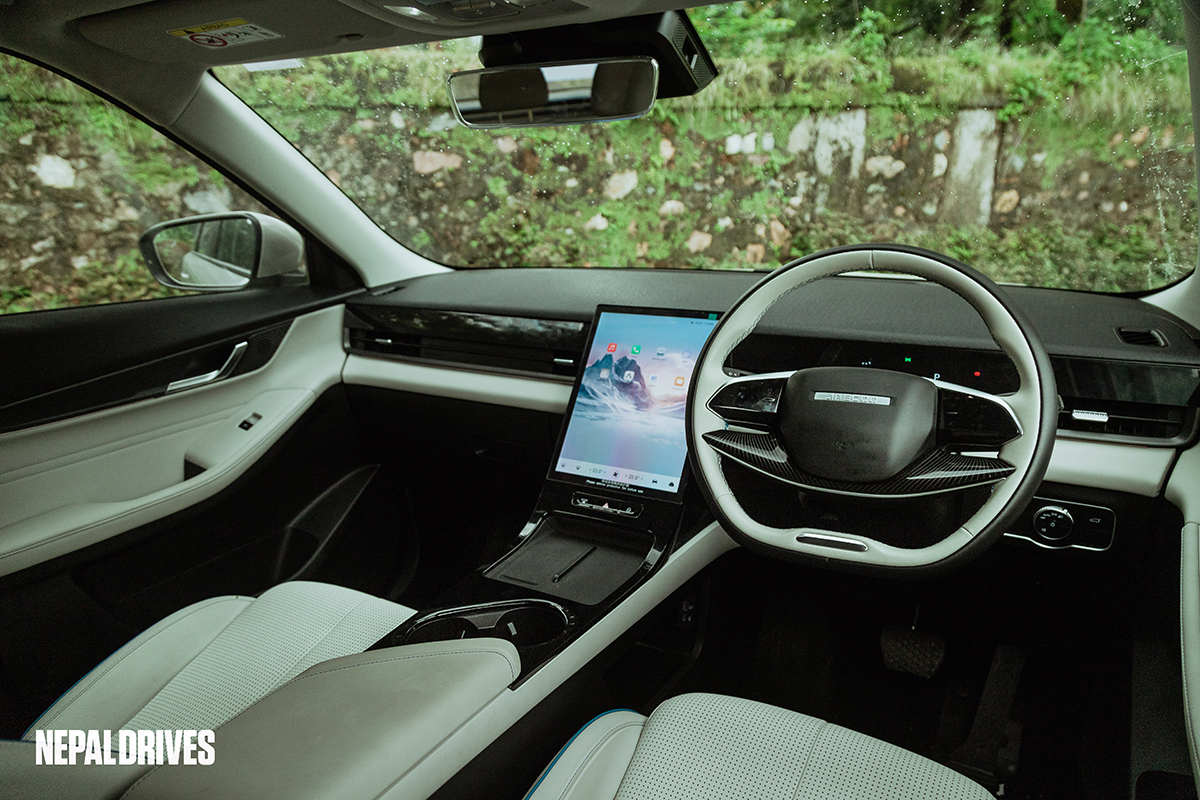
Inside, the J5 carries the modern EV theme forward. Materials are generally nice, giving the cabin a premium feel. The vertical 13.2-inch touchscreen is the centerpiece of the dashboard, and while I can get used to its orientation, the digital instrument cluster behind the steering wheel feels traditional and slightly dated.
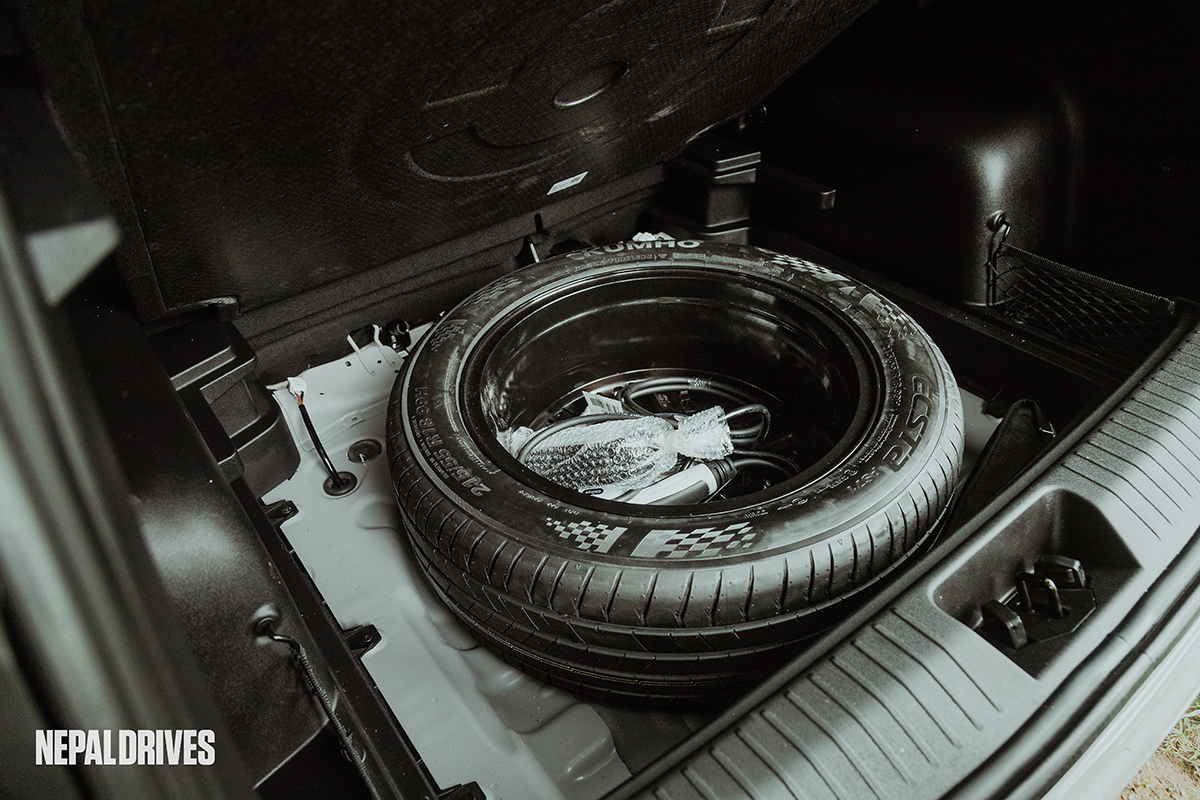
The interior is spacious enough to accommodate larger individuals comfortably, and storage options are generous, including a front frunk and a 480-liter boot expandable to 1,180 liters. A full-size spare tyre is also a welcome addition.
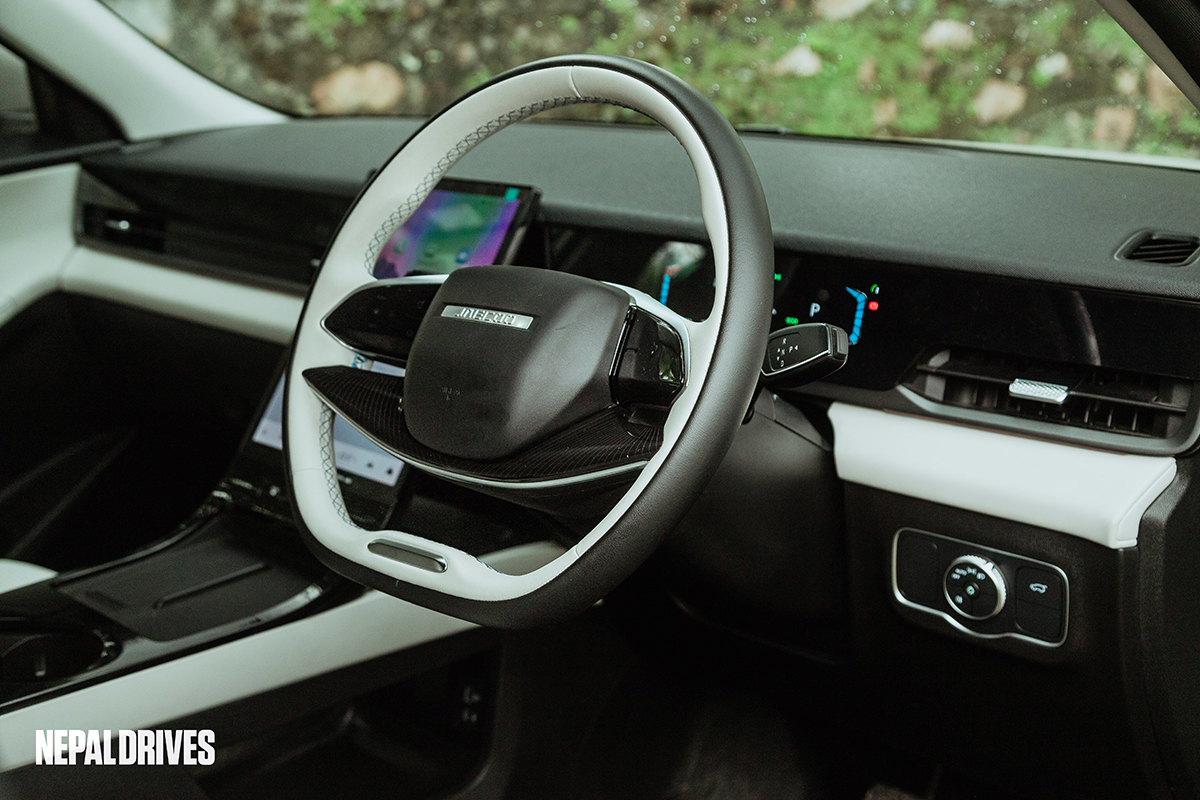
Some details, however, reveal inconsistencies. The front doors feature fabric where the windows recess, while the rear doors use hard plastic mimicking the front’s fabric, which looks odd. Blue stitching and piping, although intended as design accents, are not to my taste and feel a bit forced.
Another minor annoyance is the seatbelt interlock: the car refuses to move unless the belts are fastened, which can be inconvenient when you aren’t planning to go on a drive but just want to move the car in a garage or tight parking space. Other interior highlights include a panoramic sunroof, premium audio, ambient lighting, and a host of ADAS safety features, including airbags, brake assist, EPB with AutoHold, and a surround-view camera.
The combination of comfort, technology, and safety makes the cabin feel well-equipped and modern, even if some design choices divide opinion.
Performance and Safety
The Jaecoo J5 is powered by a 155 kW Permanent Magnet Synchronous motor, producing 211 PS of power and 288 Nm of torque, paired with a front-wheel-drive automatic transmission.
The 58.9 kWh LFP battery offers a WLTP-claimed range of 402 km. Charging is straightforward, with a 7.2 kW AC charger bringing the battery to full in about 9 hours, and a 130 kW DC fast charger taking it from 30% to 80% in 28 minutes. The top speed is approximately 180 km/h, while 245/45 R18 tubeless tyres support the ride.
On the road, the suspension — McPherson strut at the front and multi-link at the rear — is tuned slightly on the stiffer side. On smooth roads, it feels sublime, eager through corners without the body lurching. Potholes and uneven surfaces, however, are noticeable, and driving over stone-paved roads produces some cabin noise.
Power delivery is strong and flexible: Eco mode suffices for city and highway use, while Sport mode sharpens throttle response for more spirited driving. The ground clearance allows for moderate off-road use, but without AWD or more capable tyres, slippery surfaces and challenging terrain can test its limits.
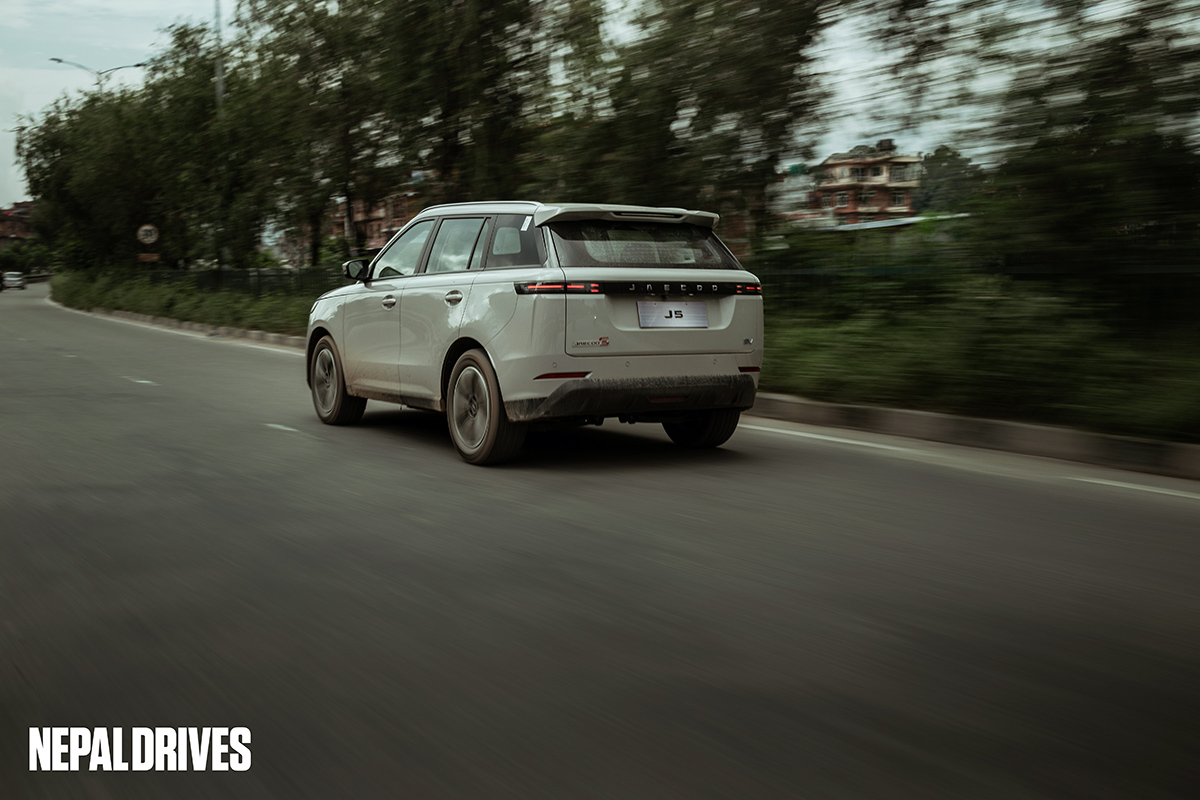
Safety features complement the performance package well. Alongside the ADAS suite, the J5 includes multiple airbags, EPB with AutoHold, brake assist, and a 360-degree surround-view camera, giving drivers confidence in both urban and semi-rural environments. Overall, the J5 manages a good balance between engaging driveability and safety-conscious design.
Verdict
The Jaecoo J5 is a competent and attractive family SUV that combines modern styling, technology, and comfort. It offers generous space, a premium feel, and enough features to make daily driving and family vacations convenient and enjoyable. Its ground clearance, coupled with decent ride quality and power delivery, allows it to reach most vacation spots, though true off-road adventures would highlight its limitations.
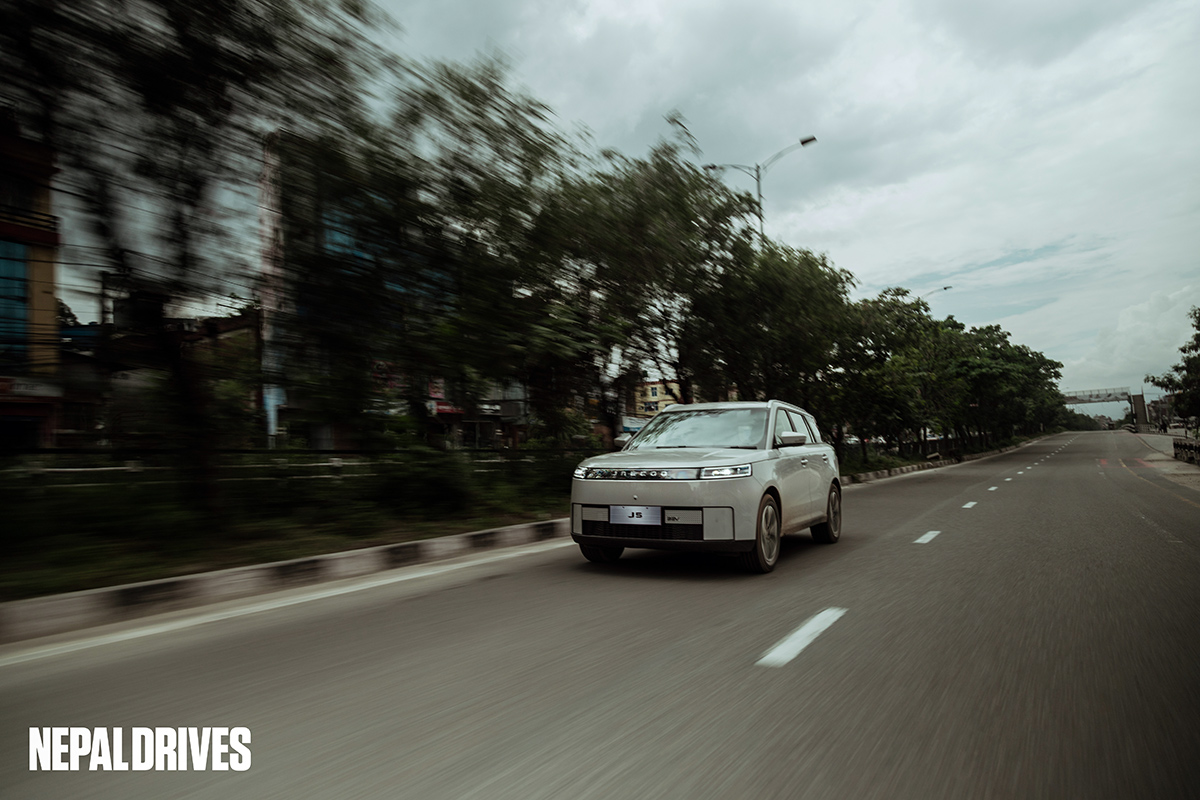
At a regular price of Rs. 60.99 lakh, the J5 already competes strongly in Nepal’s premium SUV segment. With the current offer price of Rs. 56.99 lakh, its value proposition becomes even more compelling, making it an attractive choice for families seeking a modern, well-equipped electric SUV without stretching the budget too far.
Being compared to a Range Rover sets a very high bar. While the resemblance may catch the eye, it also raises expectations that the J5 cannot fully match. Its individuality would stand out more if it didn’t lean so heavily on that comparison.
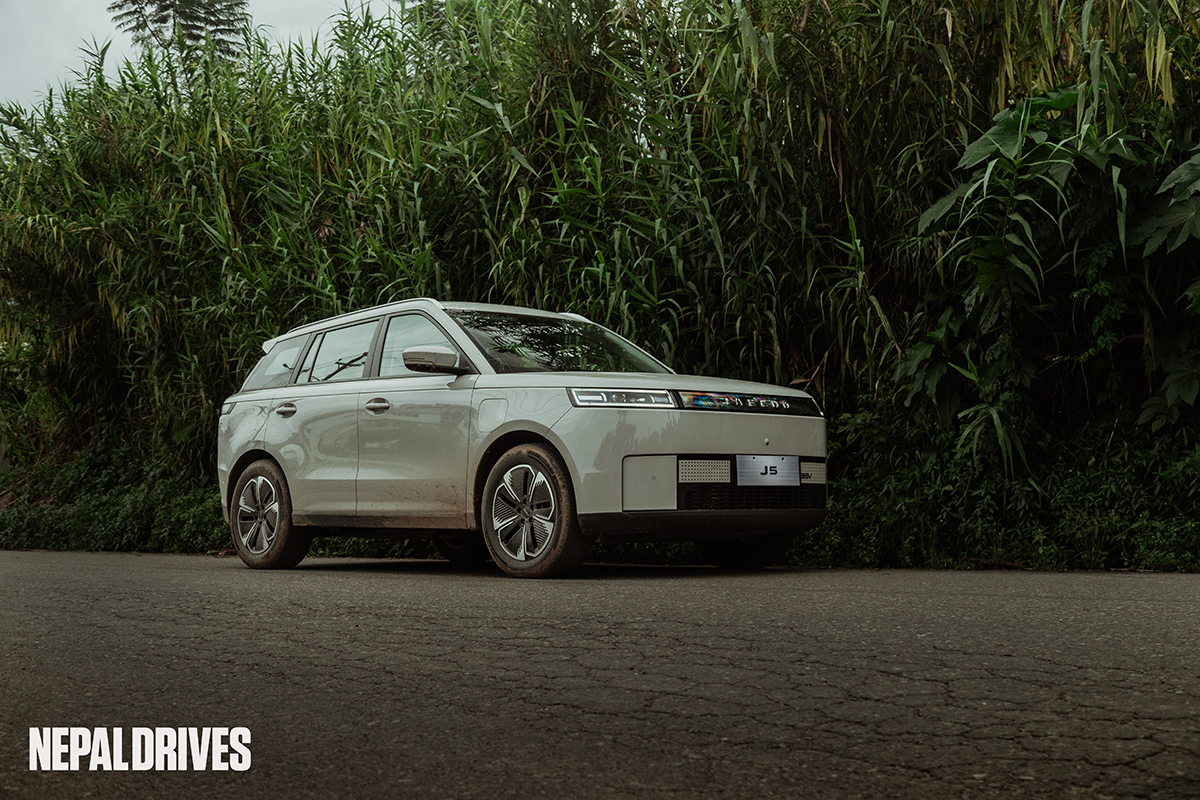
Nevertheless, the J5 succeeds in delivering value, a premium experience, and practical capabilities, making it a strong contender in a crowded Nepali EV market. Its positives — materials, space, technology, and performance — outweigh the few quirks, making it a vehicle worth considering for families seeking a modern electric SUV with style and substance.
Changan Nevo Q05: Makes Sense
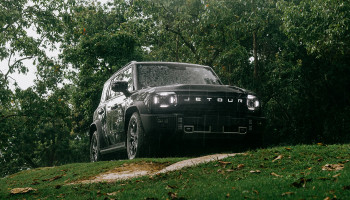
Jetour T2: Ready 2 Rumble
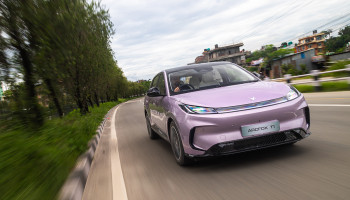
Arcfox T1: Into The Thick of It