
Nammi Vigo: A Budget-Friendly Contender with Big Ambitions



Deepal brought in their eVTOL at this year’s NADA Autoshow, and it was definitely the showstopper.
You’d assume it would take something special to pry attention away from what is essentially Nepal’s first flying car (although ironically, it remained grounded throughout its Nepal visit—except for when it was hoisted on the shoulders of transporters carrying it across landslide-hit borders). But there were a few cars that managed to do just that.

The first was the BYD Atto 2, revealed with a price tag of Rs. 43.99 Lakh. Naturally, the first wave of NADA visitors swarmed around it.Meanwhile, the Nammi Vigo stayed under wraps.
Hours passed. The eager anticipation over its reveal slowly turned into frustration as visitors walked past the covered silhouette. Behind the closed glass doors of the Dongfeng stall, a lot seemed to be going on between the company’s top heads—a frown here, bowed heads in deep discussion there. One could only guess what they were mulling over, but we'd wager the phrase “how low can we go?” was repeated plenty.

Eventually, the poppers went off, loud music filled the tented halls, and amidst the confetti and smoke, the announcement rang out: a starting price of Rs. 38.99 Lakh. In all likelihood, this was the moment that truly fanned the flames of an impending price war in Nepal’s EV industry.
And so, the Nepalese automotive scene was introduced to the Dongfeng Nammi Vigo—known as the Nammi 06 in other markets. With a starting price of Rs. 38.99 Lakh and topping out at Rs. 40.99 Lakh for the higher-spec E2+ variant, the Vigo vouched for its position as the people’s car.
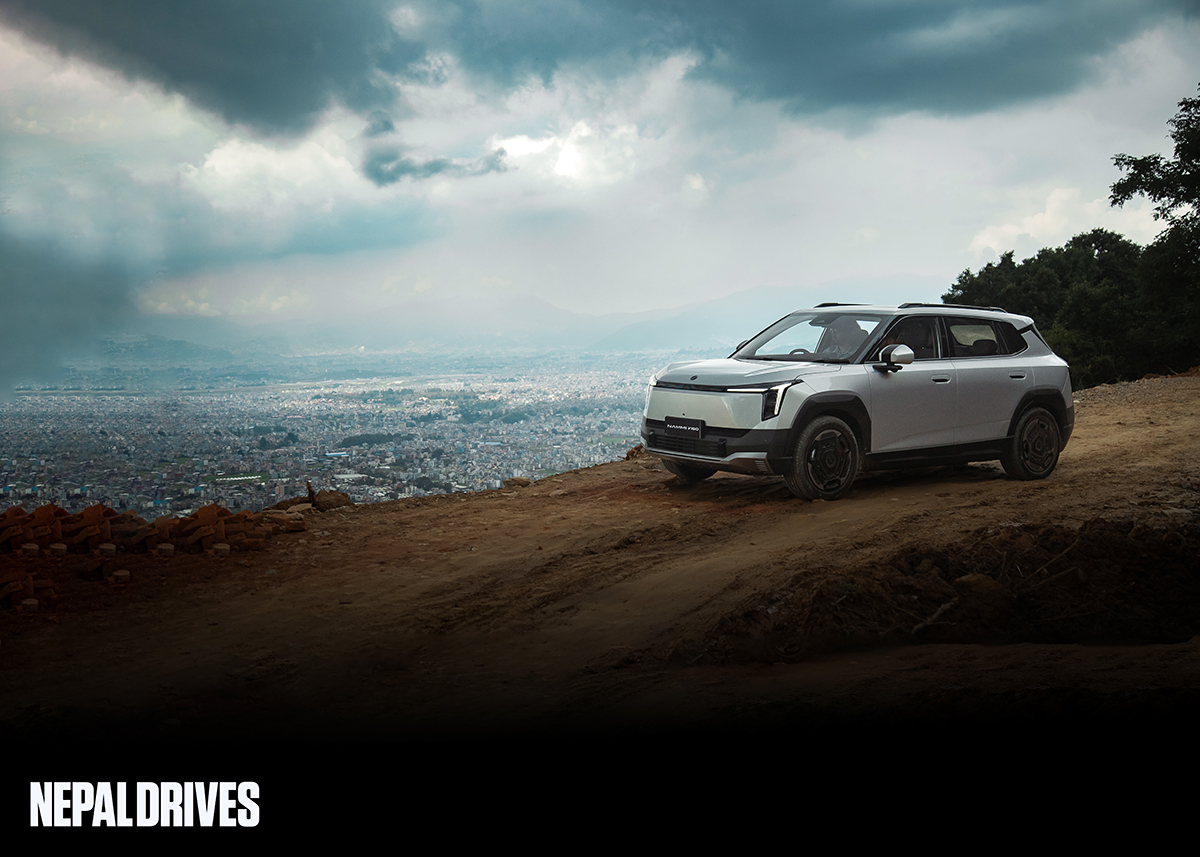
Exterior
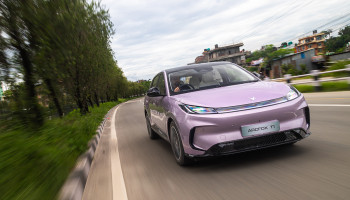
We like where the electric vehicle game is going. Prices are being slashed, and boxier designs are making a comeback. For petrolheads who grew up associating SUVs with blocky aerodynamic nightmares, the Vigo’s “magic cube” design should be welcome news. That means flat(-tish) surfaces, sharp cuts, and a robust, masculine look that should appeal to traditionalists. Yet, it doesn’t feel outdated.
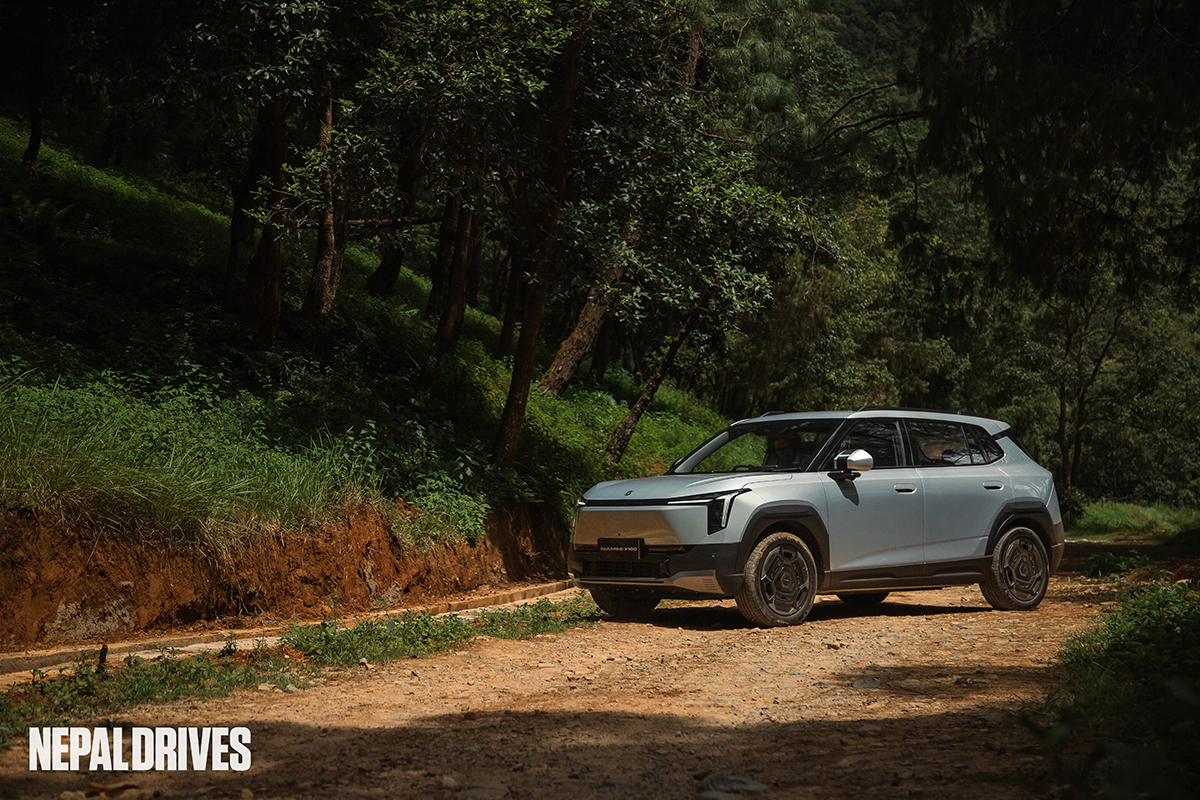
Up front, the Vigo gets T-shaped LED headlights with Adaptive High and Low Beam functionality, while the rear is marked by triangular pixel-style taillights. The profile is equally striking, with squared wheel arches clad in black and 18” rims that don’t look undersized. The semi-hidden door handles provide a clean side profile, though we are not particularly fond of hunting for the button beneath them every time we want to open the door.
What we do like is the split tailgate. Now, the company refers to it as a “unique two stage Heaven and Earth” tailgate which we suspect is something ChatGPT spit out when prompted to “make split tail gate sound fancier”.
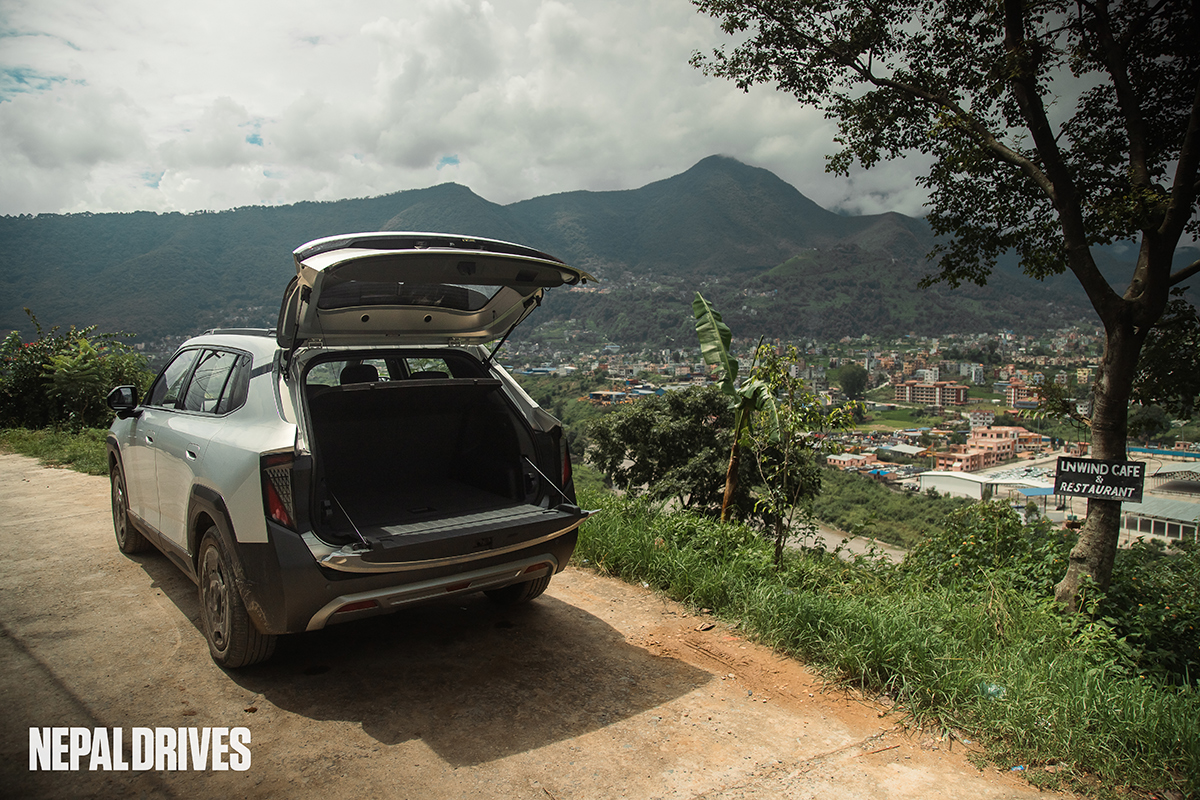
Split tailgates have been a thing for SUVs since ages, with families enjoying sunsets while sat on the released tail of the car they parked on a picturesque cliff. You can do the same on the Vigo, as long as the combined weight you put on the tailgate is no more than 150kgs.
Other positives include tasteful design without unnecessary badges or forced creases, and a claimed 190 mm ground clearance, which adds to its SUV credentials.
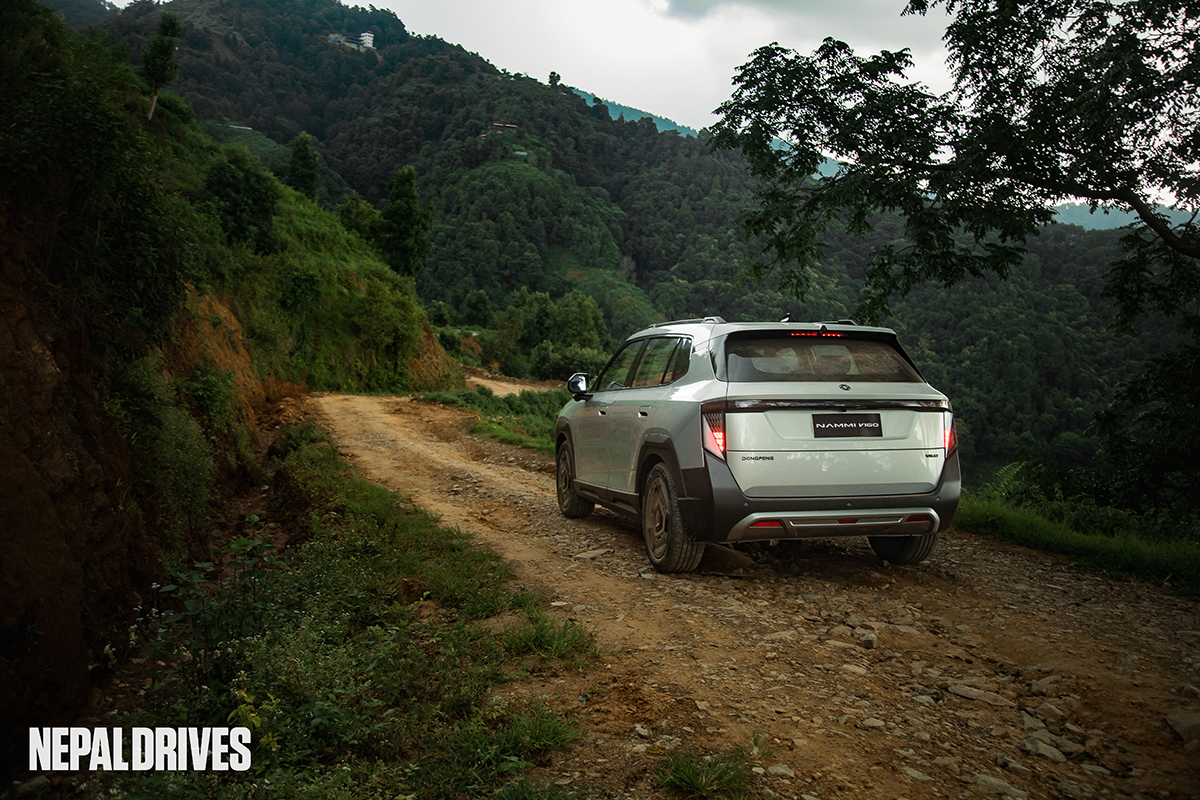
The Vigo also strikes a strong balance between compactness and spaciousness. At 4306 mm long, 1868 mm wide, and 1654 mm tall, with a wheelbase of 2715 mm—one of the longest in its class—it feels planted and confident. Storage space is equally impressive, with 500 liters on offer through a clever three-layer layout of 313, 115, and 72 liters, expandable up to 1040 liters when needed.
Interior
As we walk you through the Vigo’s cabin, keep in mind this car tops out at just Rs. 43.99 Lakh for the E2+. Before Nepal’s EV revolution, that kind of money didn’t buy you welcome seats, ADAS, or panoramic moonroofs.
Step inside, and the driver’s seat automatically slides back to make ingress easier, returning to your preset position once the door shuts. Both driver and co-driver seats are six-way electronically adjustable, with heating and ventilation for the driver. For those with larger frames, back support could be improved, but overall comfort is good.
There’s also a “Bed Mode”—the front seats fold flat, and when combined with the rear seats, they form a bed-like arrangement at the touch of a button.
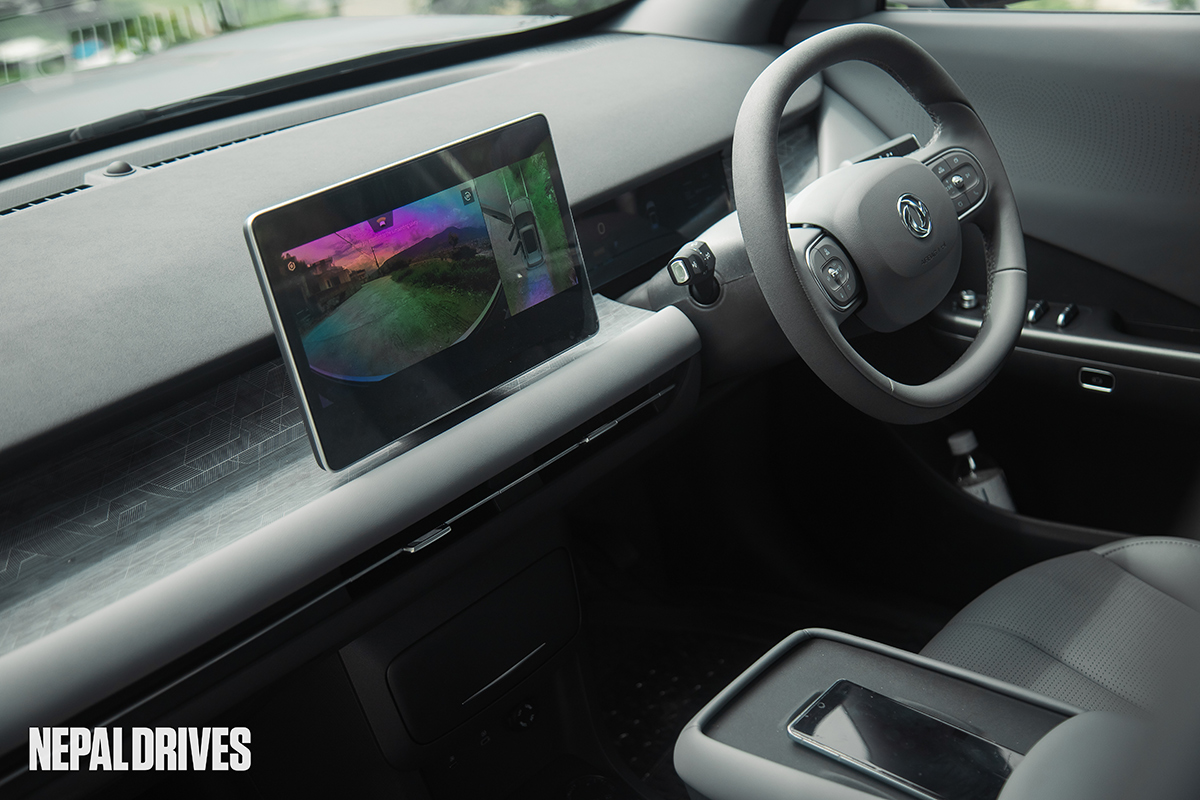
Then there is the 12.8” touchscreen infotainment system that is smooth and easy to operate. There are very few buttons on the dash, which means you operate pretty much everything from this screen. This is also where you get access to the 360 degree camera display, AC, and audio (only Apple Carplay at the moment, no Android auto).
There is another screen behind the steering wheel that comes in the form of a 8.8” digital instrument cluster. All information required by the driver is found here, but it comes in the same generic format you get in almost all EVs.
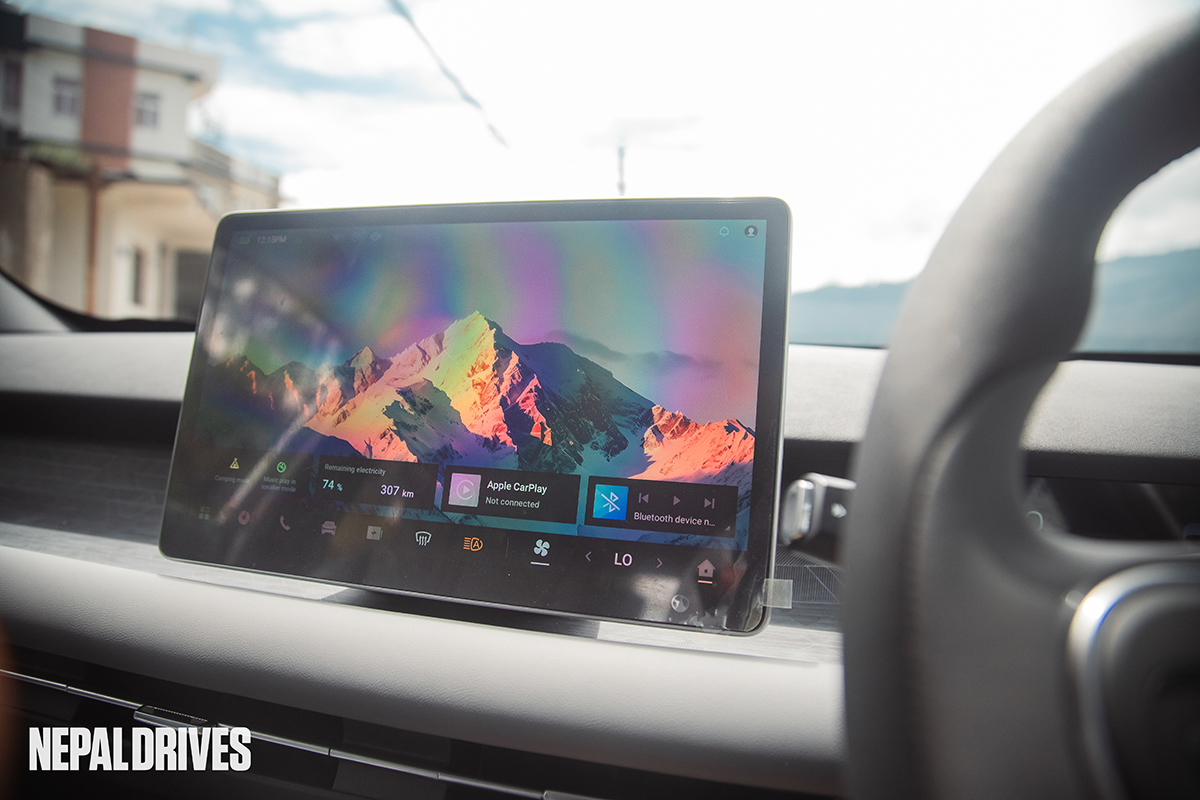
You do get a couple of buttons on the steering wheel that make things easier, including one that lets you speak to the car and have it carry out commands. All very modern, but we personally find the whole process of pressing a button, speaking, and then waiting for something to happen a bit cumbersome.
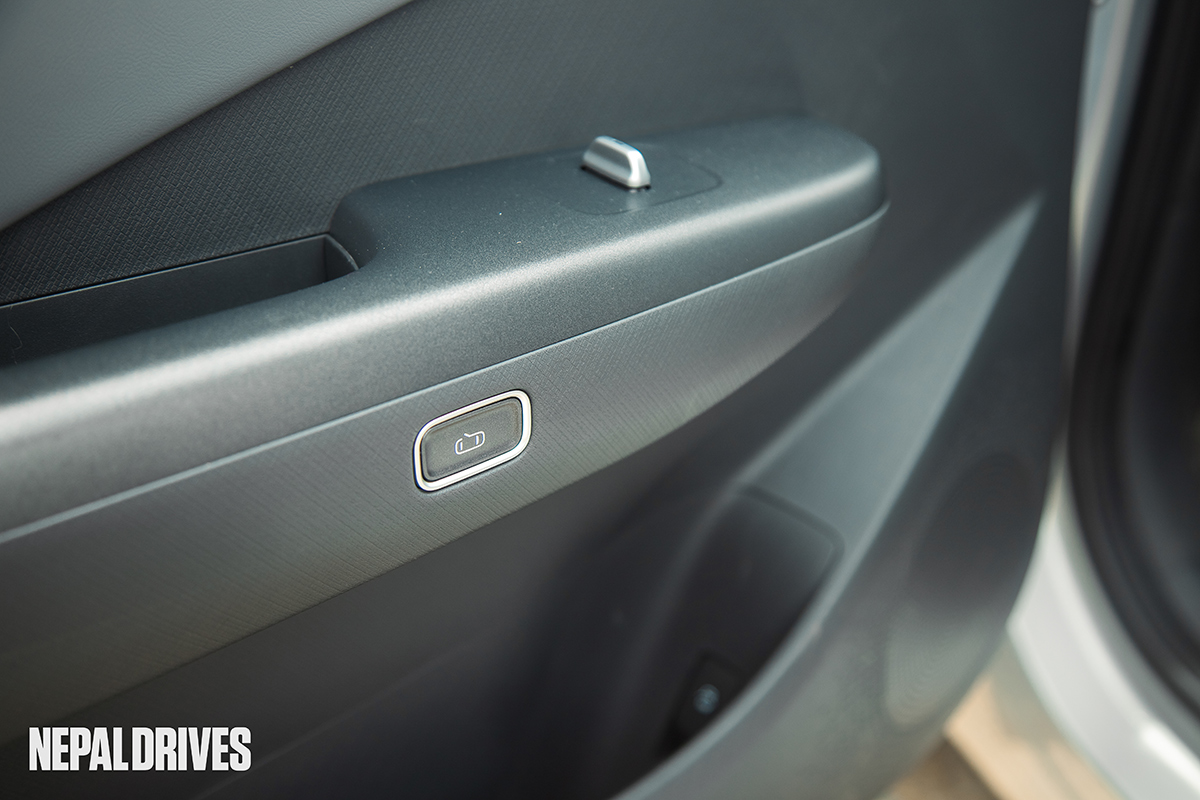
We still prefer good old buttons with instant results. The door operation is another oddity; you press a button on the door panel to open it, and while there is an emergency mechanical latch tucked near the storage compartment, this feels like unnecessary effort compared to a conventional door release.
Practicality is a real strong point here. You get a glovebox, a fabric-lined compartment for delicate items like sunglasses or phones, bottle-friendly door bins, and a generous open floor area beneath the center console that extends under the armrest. The only drawback is that anything placed there tends to slide noisily on the hard plastic.
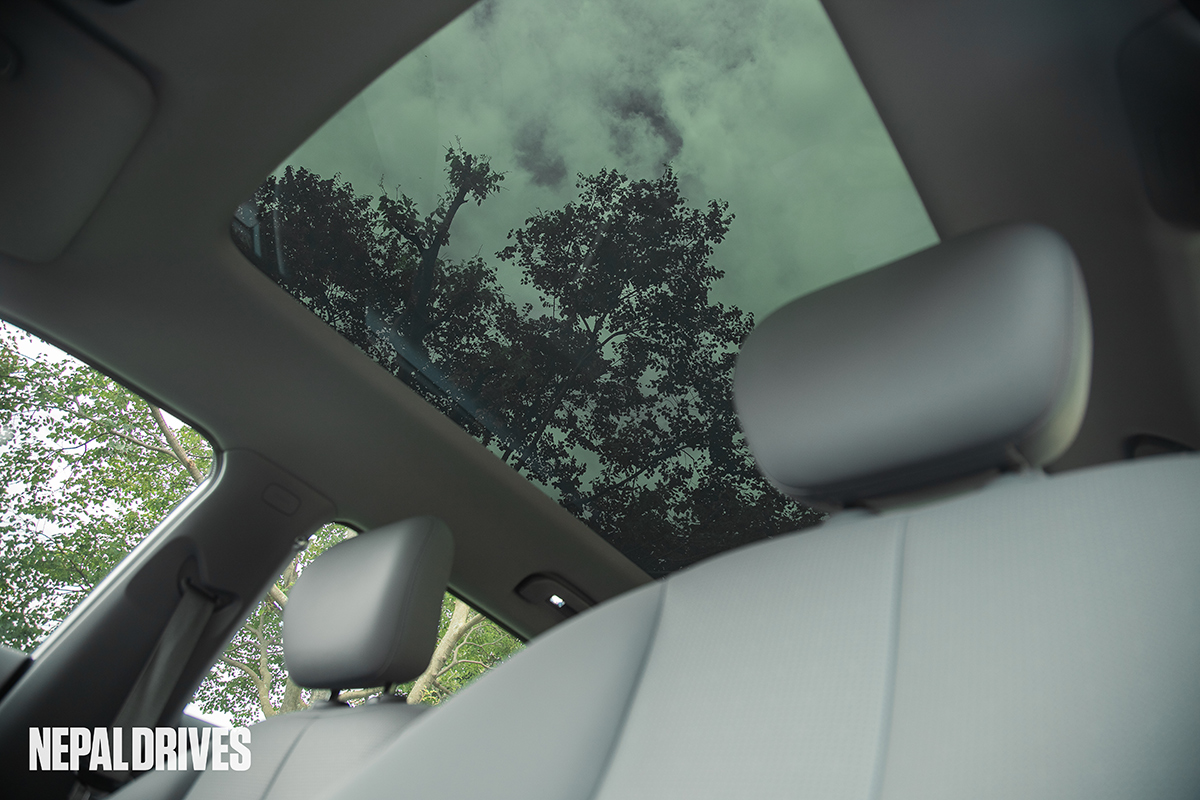
The car also offers a massive panoramic moonroof, although the absence of a sunshade means the cabin can heat up quickly in summer, forcing the AC to work overtime.
There are plenty of modern touches, like a 50W wireless phone charger, proximity unlock and auto-lock after departure, and ambient lighting with 128 colors that react to music. Rear passengers benefit from good headroom, knee room, and enough space to comfortably fit three adults. Overall, it’s a roomy and feature-rich cabin, but the grey monotone interior scheme feels uninspired and lacks the character to match the rest of the car’s personality.
Performance and Safety
While we can’t seem to find any reliable safety ratings on the Nammi Vigo itself, it is reassuring to know that its sibling, the Nammi 01, has already secured a five-star C-NCAP rating. The Vigo also sits on the same dedicated Dongfeng Quantum Architecture Platform (S3), which has been engineered specifically for small EVs.
There are two battery options: a 44.94 kWh pack in the E2 variant, which delivers a WLTP range of 300 km, and a larger 51.87 kWh pack in the E2+, stretching that to 350 km. Both use Lithium-Ion Phosphate chemistry, known for durability and safety.
Charging, however, is where the Vigo really flexes. With its Mach E battery and 3C super-fast charging technology, you can add 100 km of range in just five minutes, and go from 30 to 80 percent in only eighteen minutes.
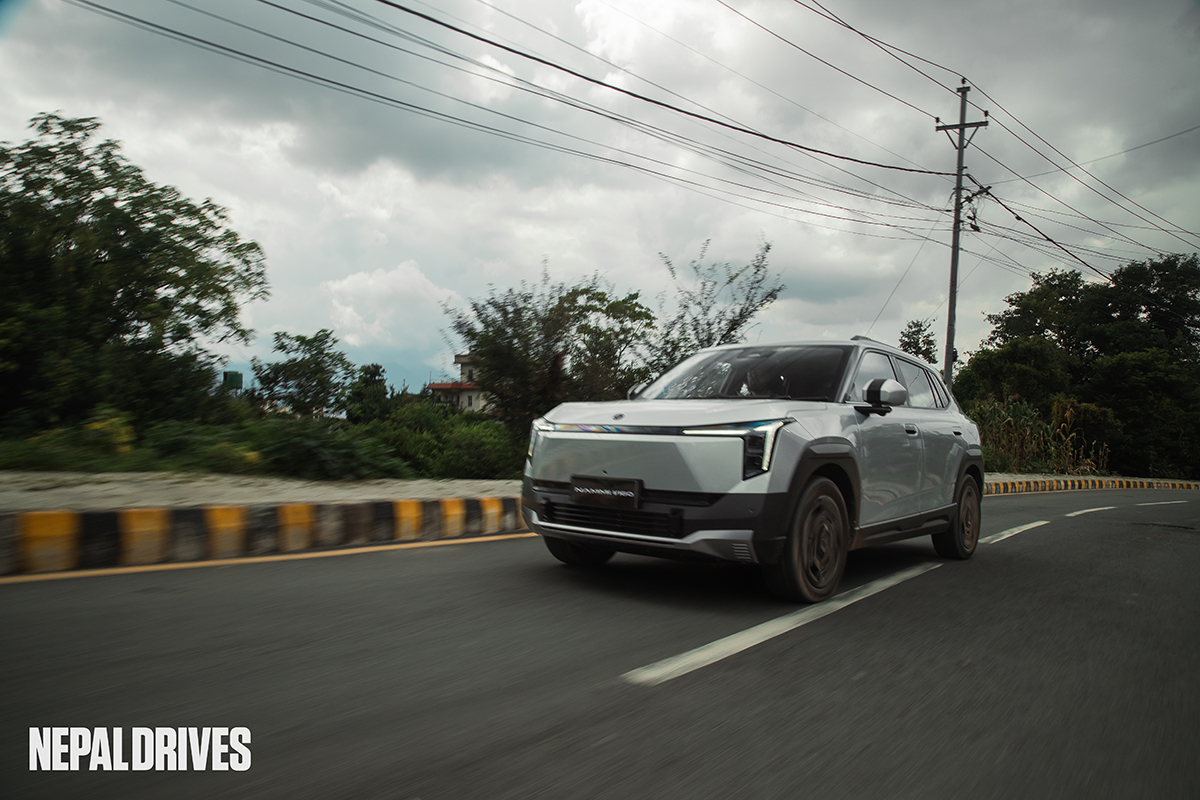
Power comes from a 99 kW permanent magnet synchronous motor, giving the Vigo smooth, quiet acceleration that feels perfectly suited to city life but still composed on highways. You can tweak the experience with three driving modes: Standard, Eco, and Sport as well as three steering modes: Calm, Standard, and Comfort.
After driving the Vigo for quite some time, it certainly feels like it is better suited for city driving. It is a car that can get you from one place to another without any particular drama.
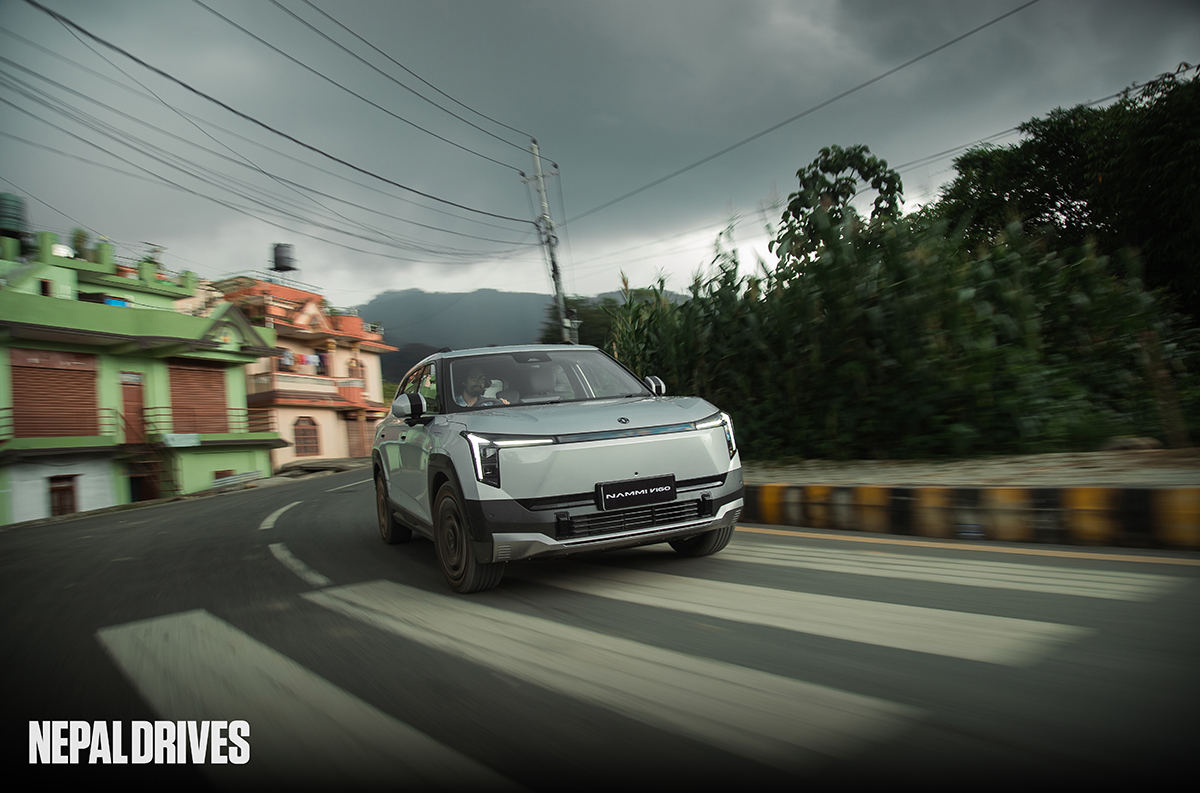
You can also drive it with general comfort on the highways, but performance is what you would expect to be from a generic EV of this segment.Body roll is well contained and it feels punchy at times, but it is not particularly geared towards driving enthusiasts.
On the safety front, the Vigo comes very well equipped. Six airbags, a 360-degree camera, and a suite of Level 2 ADAS features (on the E2+ variant) including forward collision warning, lane departure warning, lane keeping assist, and intelligent speed control all work together to make the drive safer and more relaxing.
The adaptive headlights automatically adjust between high and low beams and have a delay-off function, while conveniences like Autohold, proximity unlock, and lock-after-departure add to the sense of modernity.
Verdict
At the end of the day, the strongest card the Nammi Vigo has to play is its price. At around two lakhs less than the BYD Atto 2, it undercuts a rival that already has strong brand recognition both here in Nepal and around the world. That premium on the Atto 2 does bring some reassurance in the form of a 10-year warranty on both the battery and motor, compared to the Vigo’s 8-year coverage.
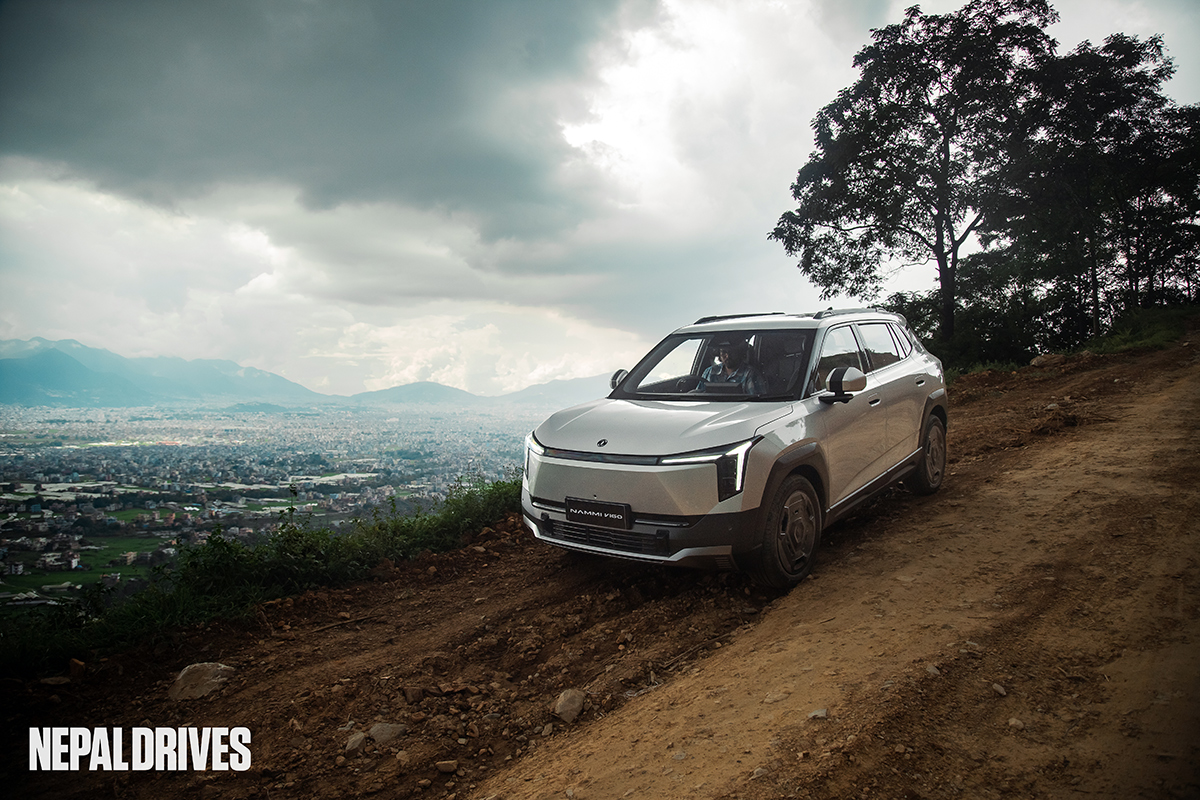
But in a market where price remains the deciding factor for many buyers, the Vigo has plenty to offer without feeling like a compromise. The real question now is whether that two-lakh difference is enough to sway buyers away from the Atto 2—or if the security of the bigger brand will still prove too strong.



Changan Nevo Q05: Makes Sense

Jetour T2: Ready 2 Rumble
Arcfox T1: Into The Thick of It