NADA–Transport Minister Kulman Ghising Meeting Focuses on Charging Infrastructure, Financing, and Import Policies





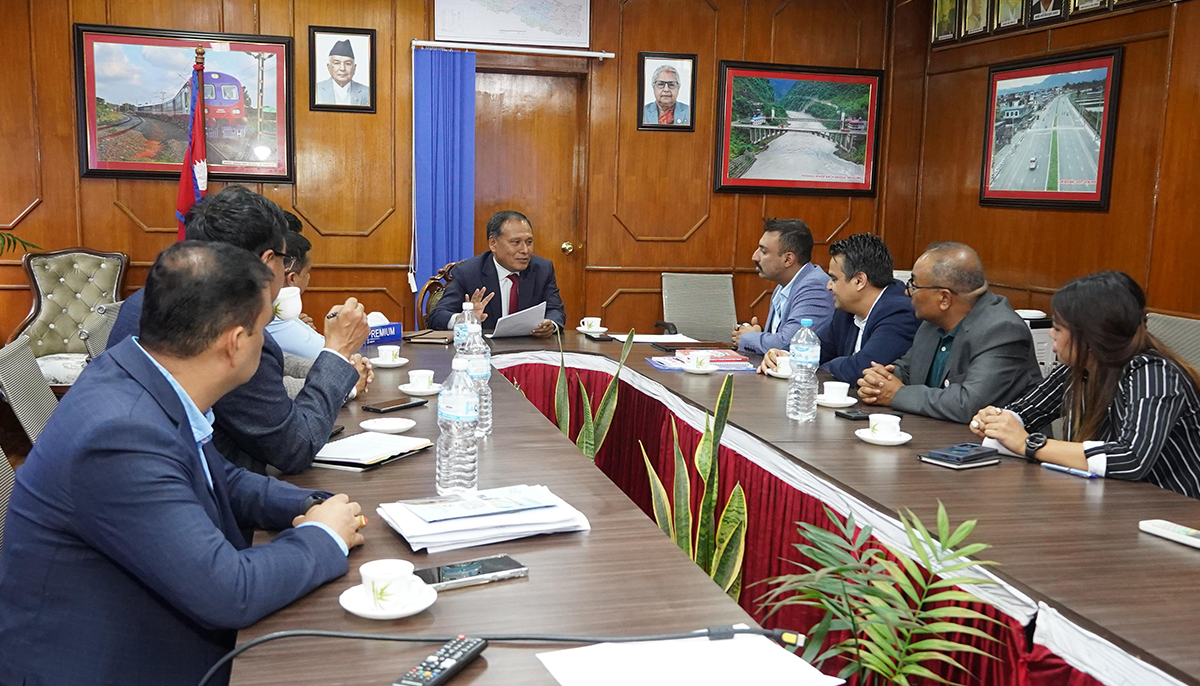
A delegation led by NADA President Karan Chaudhary held a detailed discussion with Hon. Minister of Physical Infrastructure and Transport, Kulman Ghising, regarding the overall challenges faced by Nepal’s automobile sector.


During the meeting, Chaudhary highlighted that since the Ministry of Physical Infrastructure and Transport and the Department of Transport Management (DOTM) are key stakeholders for NADA, their policies and regulations directly affect the automotive industry. He noted that some past policies had hindered business growth, ultimately reducing government revenue.

He proposed increasing the current bank financing limit for petrol and diesel vehicles from 60% to 80%, which, he emphasized, would help revitalize the sector. Presenting data that all categories of vehicle sales have declined in Nepal, Chaudhary stressed the need for practical policies to support the industry.
On electric mobility, he pointed out Nepal’s shortfall in charging infrastructure and urged the Nepal Electricity Authority (NEA) to take stronger action. He also raised concerns about the complicated process of implementing embossed number plates, the need to streamline driving license distribution, and the importance of rationalizing the upcoming 2082 directive on vehicle import, production, and assembly through deeper consultation with stakeholders before finalization.

Chaudhary further called for reconsideration of the high duties imposed on automobiles by classifying them as luxury goods, arguing this classification does not align with international standards. He pressed for complete digitalization of DOTM records and processes and requested the continuation of government support for transformer installations needed for DC fast-charging stations.
Meanwhile, NADA General Secretary Surendra Kumar Upreti raised concerns about the China border remaining partially closed, which has significantly impacted the automobile trade ahead of Dashain. He added that unrestricted 72-hour entry permits for Indian cargo trucks have been harming Nepali businesses, and suggested limiting the time to 24 hours and restricting operations within 16 kilometers of customs points.
Upreti also warned that implementing certain provisions of agreements with neighboring countries without modification could severely disrupt Nepal’s commercial vehicle sector, urging the government to conduct a thorough study before signing.
President Chaudhary also submitted a comprehensive 28-point recommendation for the long-term reform of the automobile sector.
In response, Minister Ghising assured that NEA is investing billions in building charging stations nationwide and that a favorable environment will be created for private entities to establish their own. He further committed to setting up recycling plants in Nepal for reusing batteries made with rare minerals.
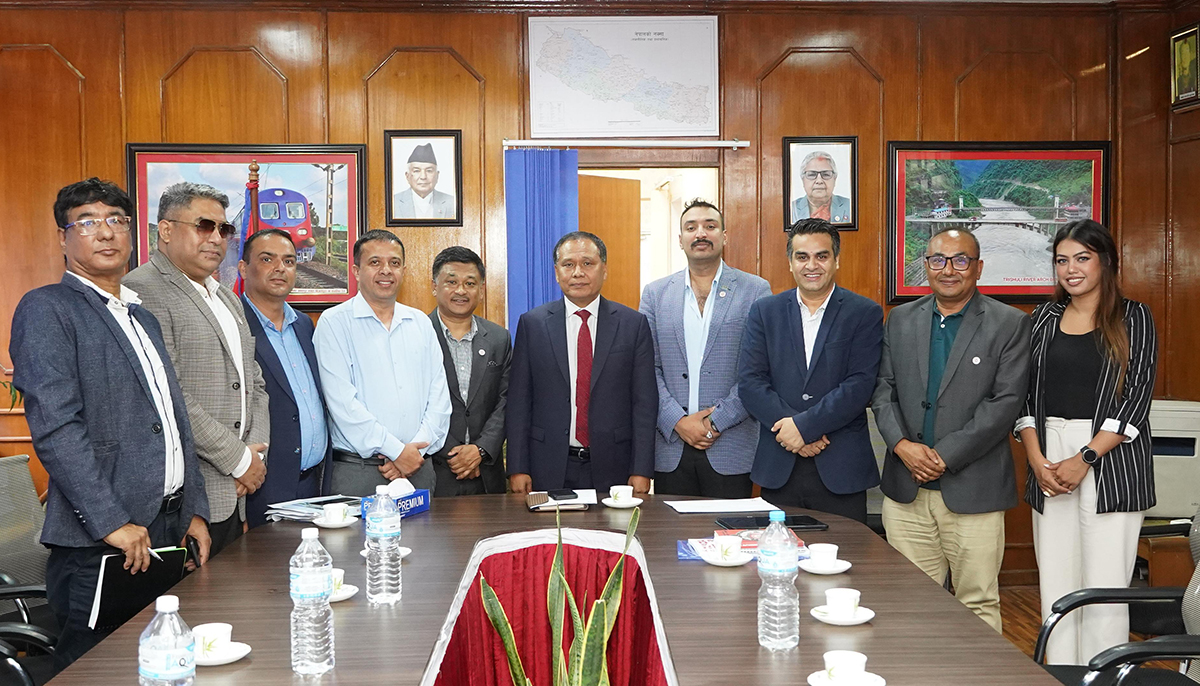
The discussion was attended by NADA President Karan Chaudhary, General Secretary Surendra Kumar Upreti, Treasurer Milan Babu Malla, Central Committee Members Prakash Kapuri, Kapil Shivakoti, Sohan Shrestha, and Director General of DOTM, Rajiv Pokharel.






Royal Enfield Hunter 350 Gets New Variant and Colours in Nepal
GAC Motor Nepal Issues Statement on Aion Y Fire Incident in Bharatpur
Changan Nevo Q05 Launched in Chitwan