

Mitsubishi Unveils All-New Pajero, Bringing Back the Iconic 4WD



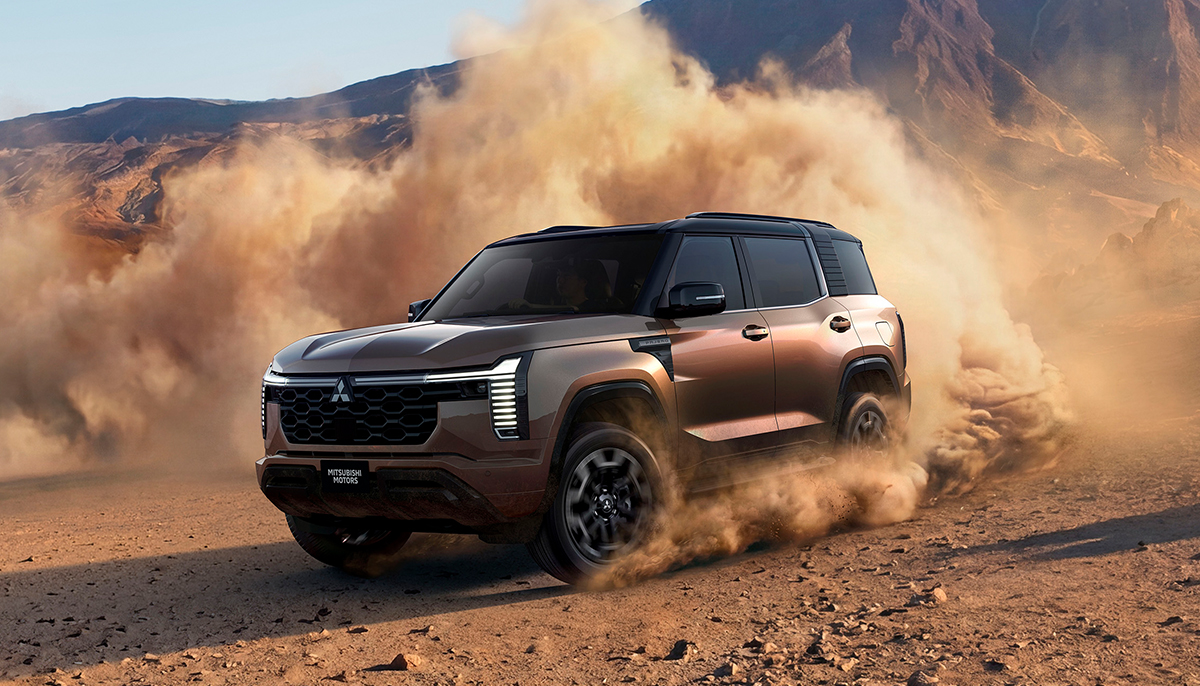
The Mitsubishi Pajero is back. One of Mitsubishi’s most recognizable nameplates has returned in an all-new fifth generation.
Unveiled as the brand’s new flagship full-size SUV, the new Pajero brings back the body-on-frame construction that helped define its earlier generations, while adding the technology and refinement expected from a modern SUV.


The Pajero name has been part of Mitsubishi’s SUV story since 1981, with the first-generation model establishing its reputation as a serious off-roader.

Over four generations, the Pajero became a familiar sight in markets including Japan, Australia and across Asia, while its rally exploits further cemented its reputation. More than 3.29 million units were produced before the fourth-generation model finally went out of production in 2021.
The fifth-generation Pajero takes a different route from the third and fourth generations, returning to a ladder-frame chassis and traditional 4WD architecture. It is equipped with Mitsubishi’s Super Select 4WD-II (SS4-II) system and Super-All Wheel Control (S-AWC).

The SS4-II system offers 2H, 4H, 4HLc and 4LLc settings, while seven selectable driving modes — including Gravel, Snow, Mud, Sand and Rock — allow the SUV to adapt to different surfaces.
Under the bonnet is a 2.4-litre clean-diesel engine developing up to 480 Nm of torque, paired with a newly developed eight-speed automatic transmission. It is a powertrain aimed at providing the kind of low-end muscle expected from a Pajero, rather than simply chasing outright performance.
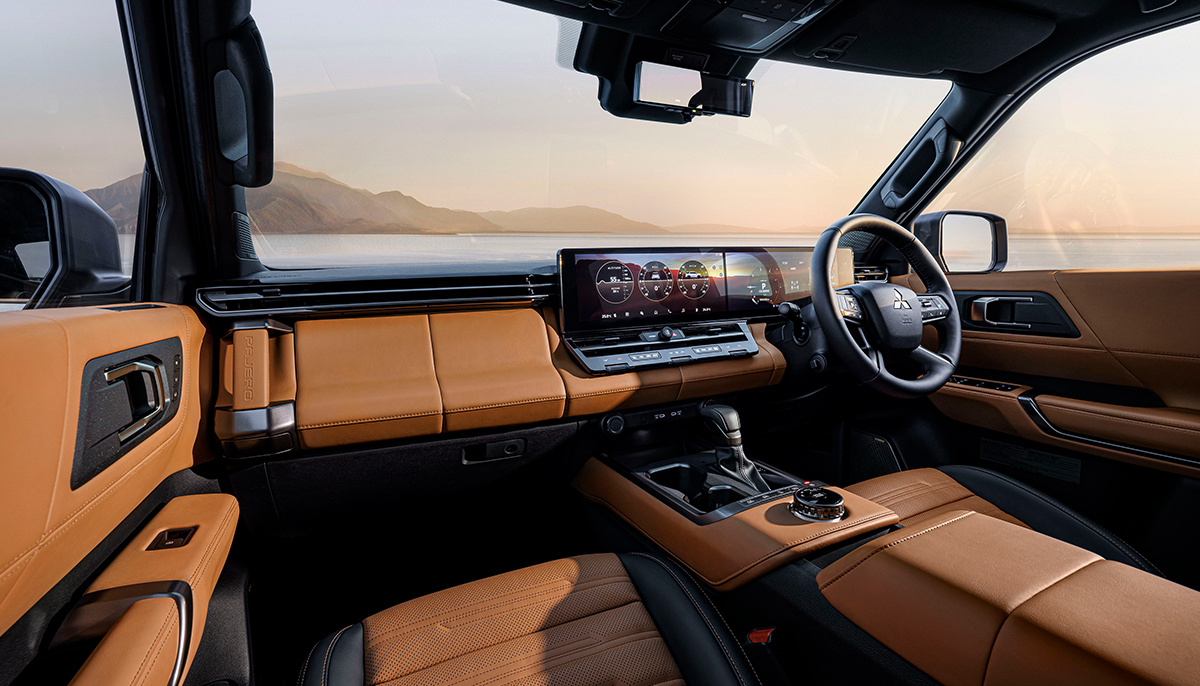
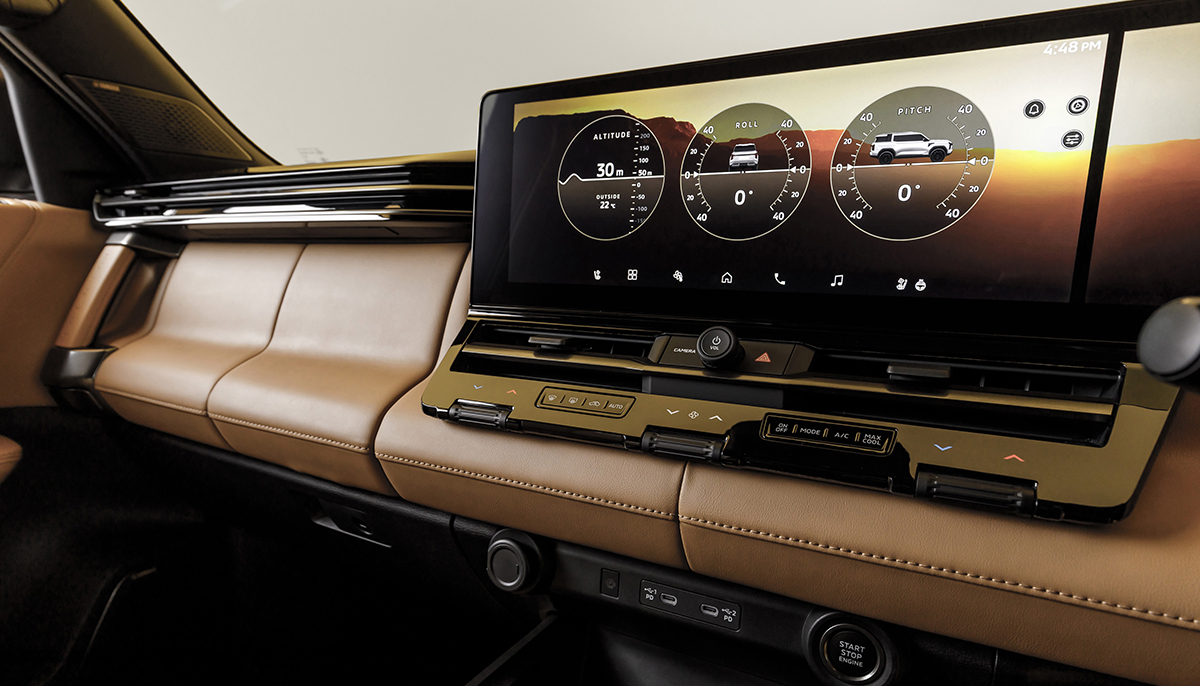
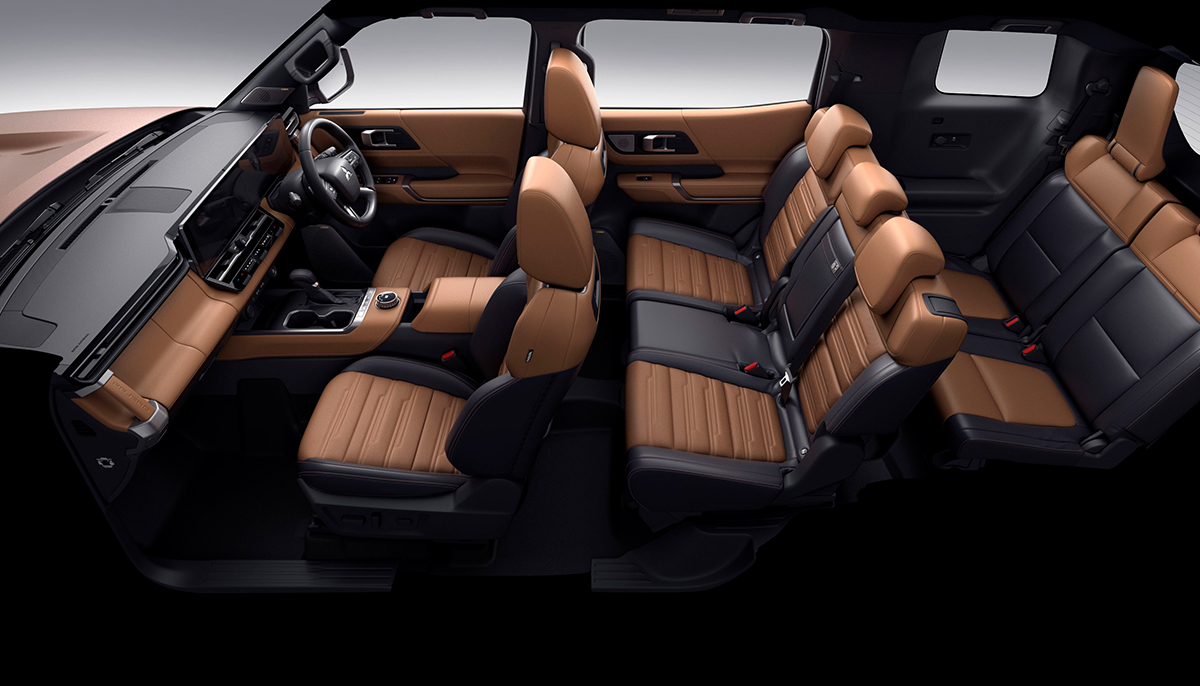
The SUV gets a three-row, seven-seat cabin, with a more sophisticated interior than its predecessors. Two 14.3-inch displays dominate the dashboard, while three-zone climate control and additional sound insulation are intended to make long journeys more comfortable.
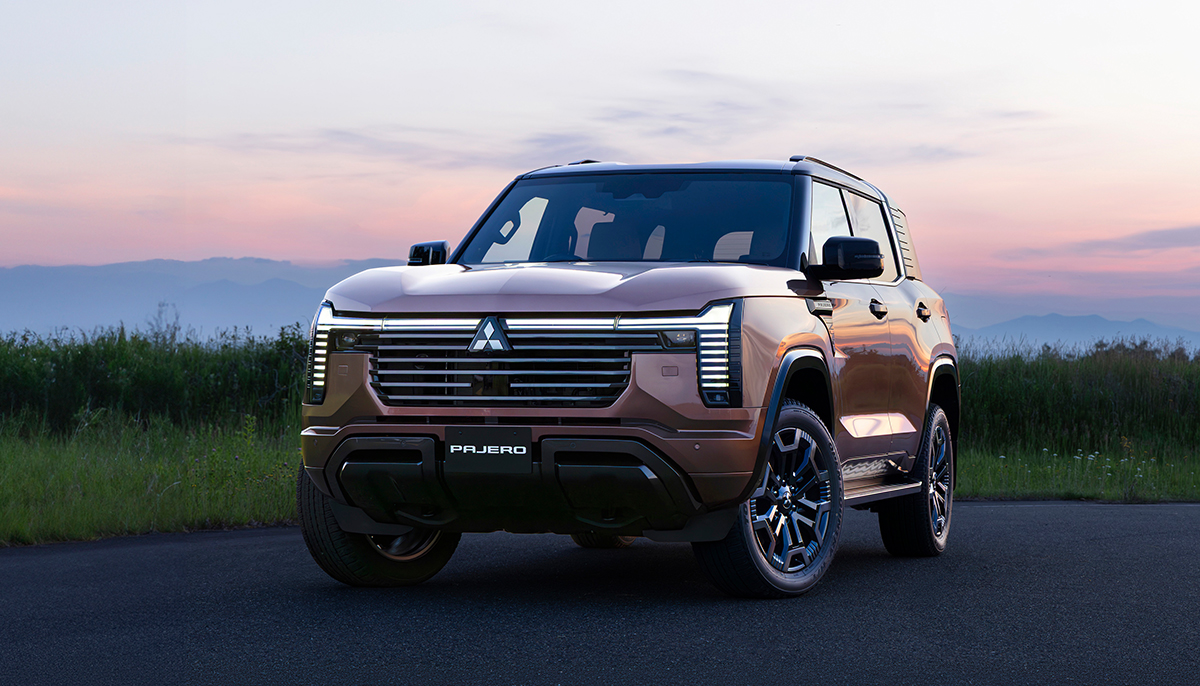
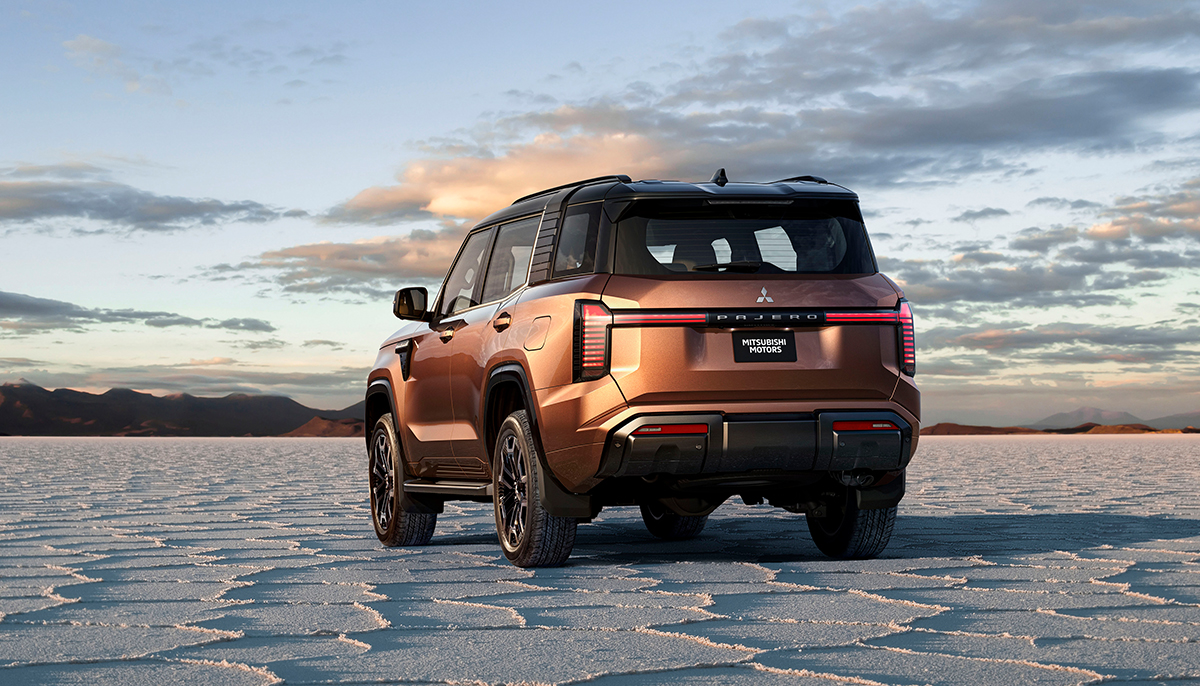
Visually, Mitsubishi has taken inspiration from Pajeros of the past without attempting to recreate them. The upright proportions, strong horizontal lines, C-pillar design and rear hexagonal motif are modern interpretations of familiar Pajero cues. T-shaped lighting and a broad, muscular body give the new model a distinctly contemporary identity.
It is also considerably larger than the Pajeros many owners will remember. The new SUV measures 4,920 mm long, 1,925 mm wide and 1,910 mm tall, with a 230 mm ground clearance. Its 30.4-degree approach angle and 25.8-degree departure angle further underline its off-road intentions.
Mitsubishi has also brought modern safety technology to the nameplate, including forward collision mitigation, lane assistance, adaptive cruise control, eight airbags and a 3D multi-around monitor. The camera system can even provide an under-floor view to help drivers see obstacles that would otherwise remain hidden when tackling difficult terrain.
Perhaps the most interesting part of the comeback is where Mitsubishi has positioned the Pajero. This is no longer simply the rugged family 4WD of the past. The company wants the nameplate to sit at the top of its SUV lineup, combining the old Pajero formula of durability and off-road ability with greater comfort and refinement.
The new Pajero will be built in Thailand, with Thailand receiving the model first, followed by Japan and Australia during fiscal 2026. From fiscal 2027, Mitsubishi plans to introduce it to around 100 markets globally.
For Nepal, the return carries a little extra weight. The Pajero remains a name that still commands recognition among SUV enthusiasts, particularly those familiar with its reputation on difficult roads and its long history in the region.