
Hyundai Creta Electric: Familiar Name, New Game



As exciting as fully reclining seats, panoramic sunroofs, massive screens, and the many other features in a car can be, they’re not always enough to move the needle, especially in a market like Nepal, where a car’s badge often speaks louder than its brochure. Enter the Hyundai Creta Electric.
This isn’t Hyundai’s first attempt at electric mobility, but this time, they’ve brought the tech to one of their most trusted nameplates. The Creta has become a household name, a go-to choice for many Nepali families looking for a dependable, stylish, and well-supported compact SUV. That familiarity holds weight.

The name "Creta" carries a lot of expectations, and with the EV version, Hyundai is counting on that trust to appeal to new-age buyers, especially those who’ve grown wary of the wave of new Chinese brands with impressive spec sheets but unproven long-term reliability.
LOOKS FAMILIAR, FEELS FAMILIAR
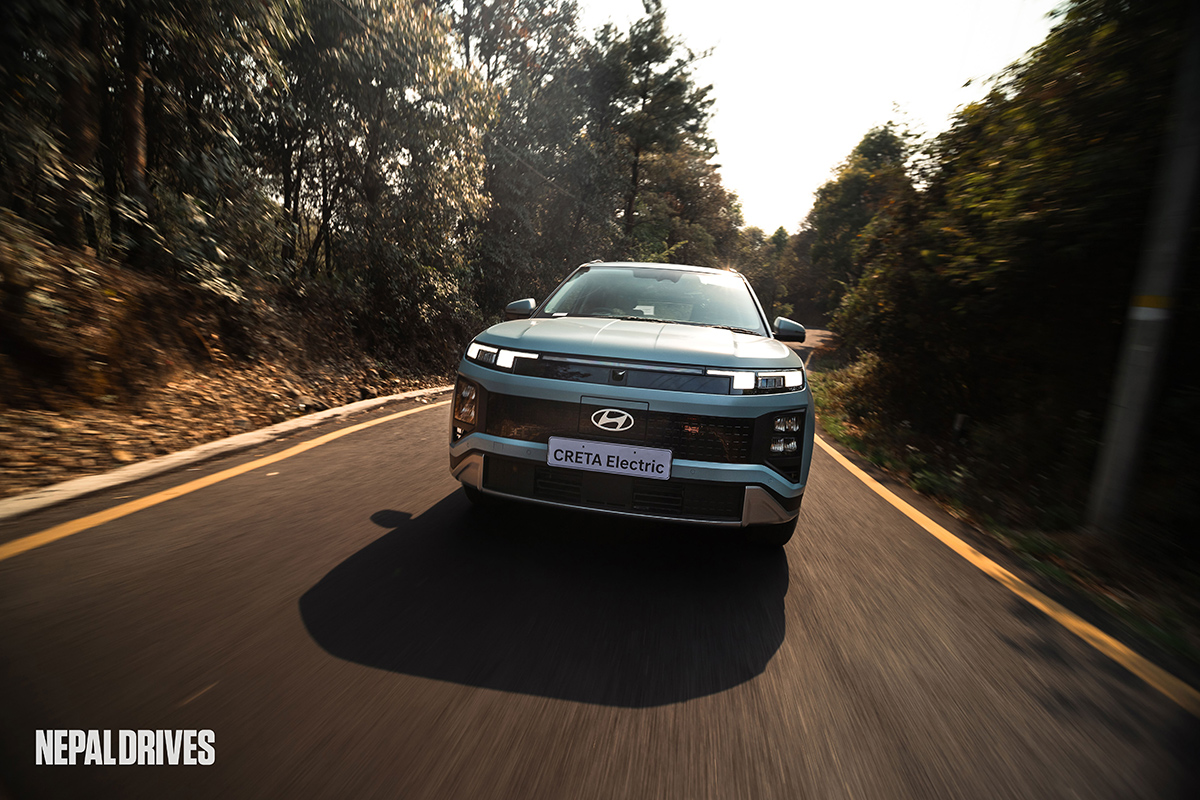
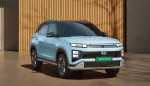
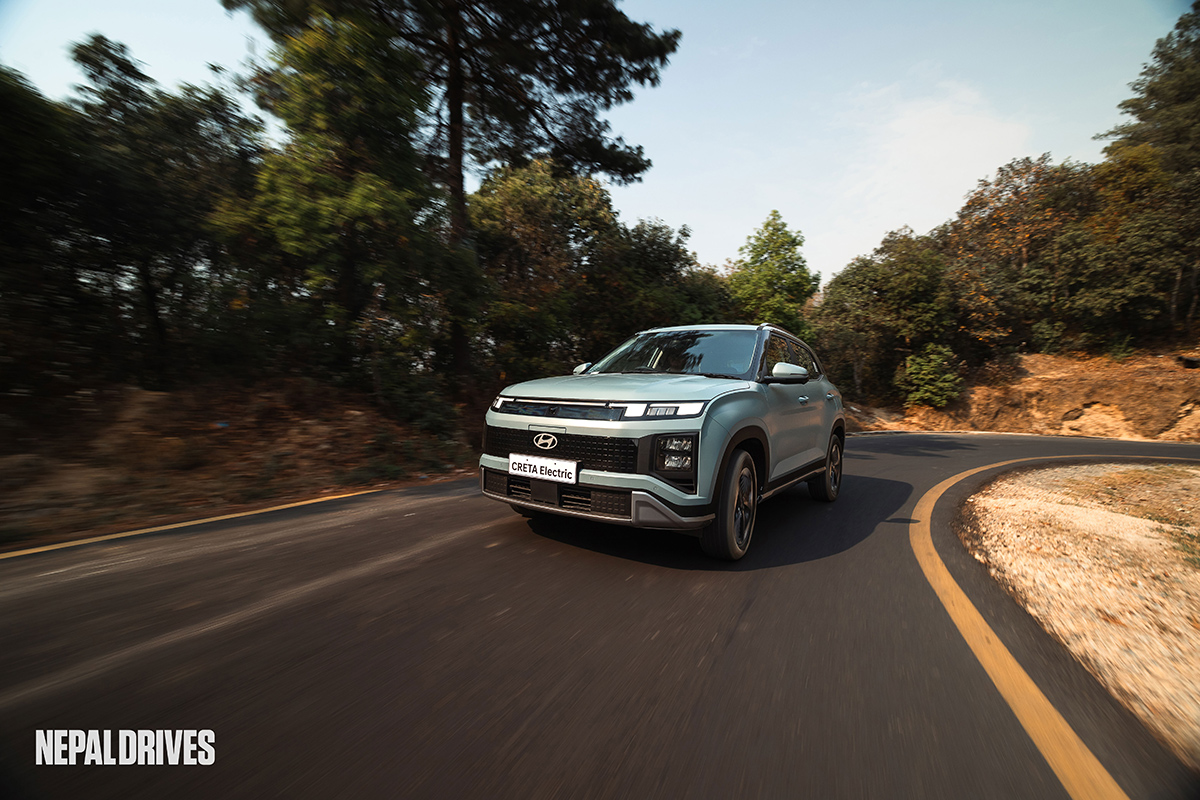
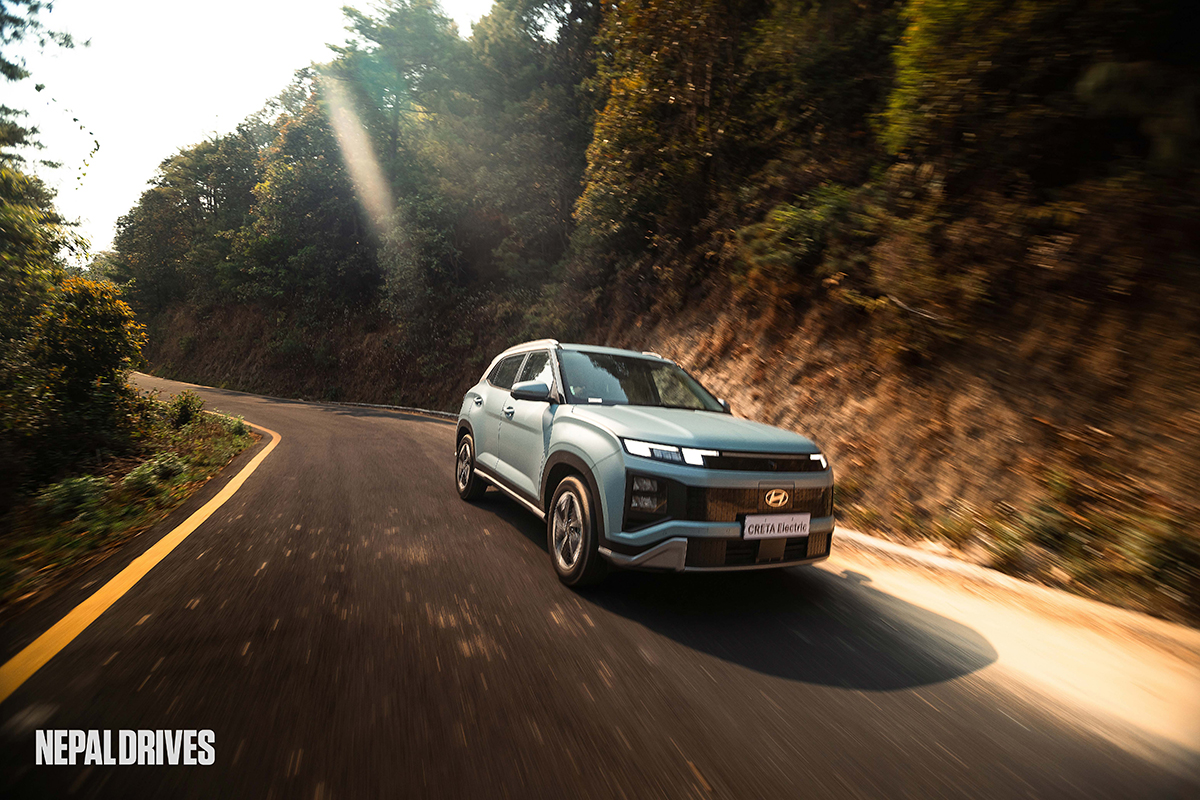
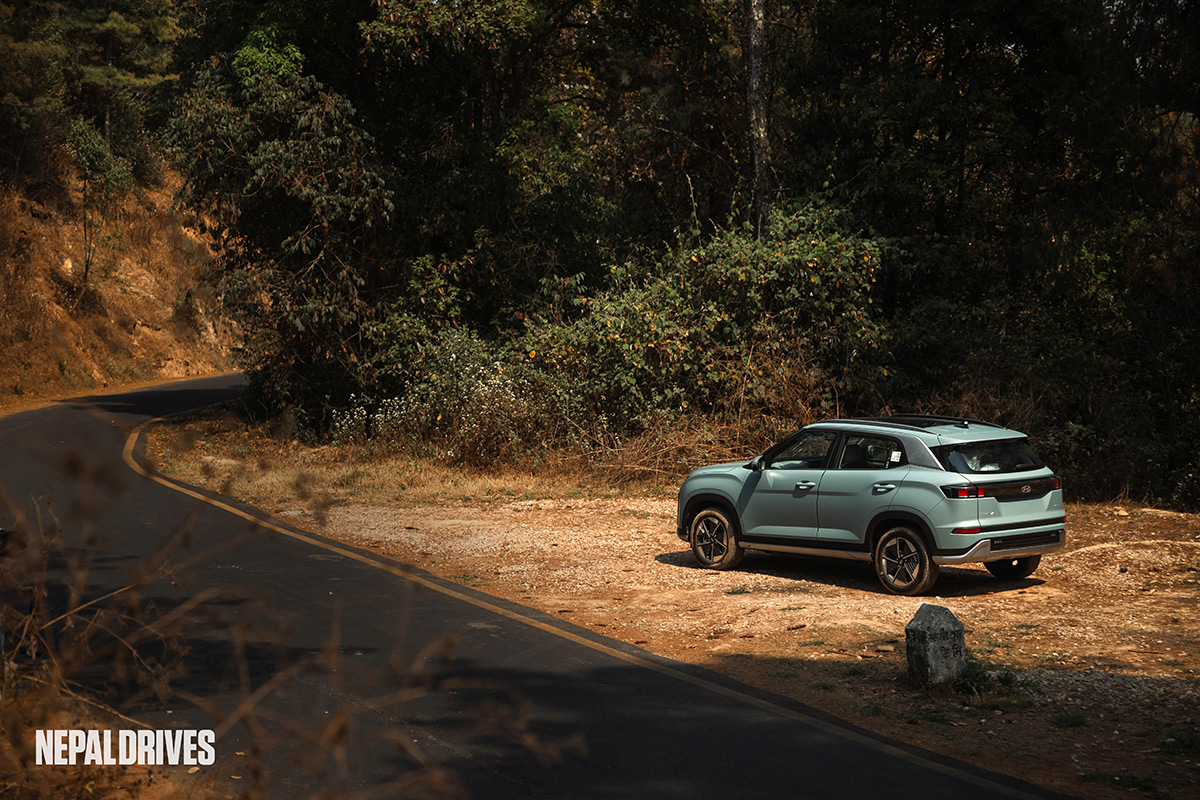
On the outside, the Creta Electric proudly shows its roots. The silhouette and proportions are immediately recognisable, but you’ll notice subtle EV touches, like the closed-off grille, aero-focused alloy wheels, and a redesigned front bumper. It doesn’t shout “EV,” and that’s probably the point. For many, especially older buyers, familiarity is comforting.

Inside, the cabin is clean, functional, and tastefully put together. Hyundai hasn’t followed the trend of eliminating buttons entirely, and we’re thankful for that. You still get physical controls for the climate and other essentials, which is a small but meaningful win for both safety and everyday usability. That said, the screen bezels look a little thick and outdated compared to the sleeker interiors offered by Chinese rivals, which may bother some buyers.
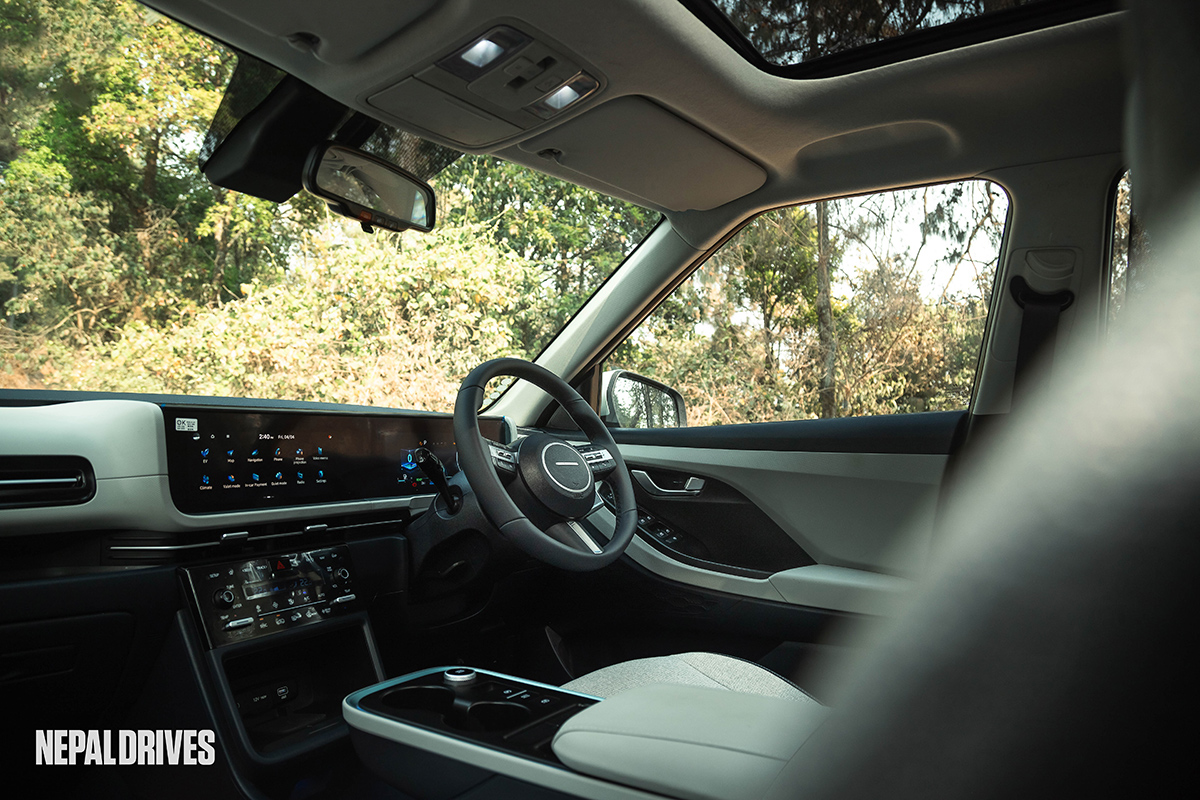
Still, you get twin 10.25-inch displays: one for the digital driver’s console and the other for infotainment, with crisp visuals and good response. Wireless Apple CarPlay and Android Auto are not available on the top trims due to Hyundai’s native OS, but the wired versions are included.
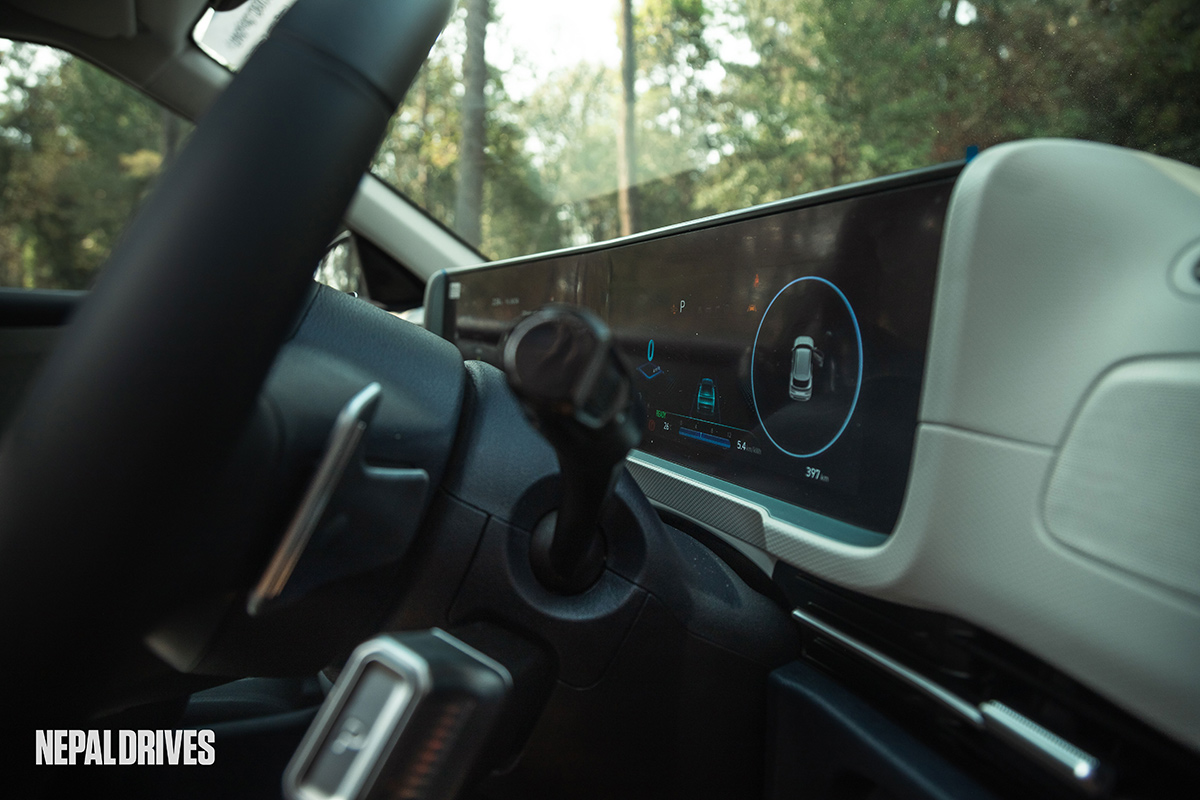
Other features include a rotary drive selector, ventilated seats, ambient lighting, wireless phone charging, a panoramic sunroof, and a powered driver’s seat. It’s well-equipped, even if it doesn’t push boundaries.
PERFORMANCE AND RANGE
In Nepal, the Creta Electric comes only with the 42 kWh battery option. It delivers a claimed MIDC range of 320 km, which realistically should translate to about 250 to 270 km in typical urban conditions.
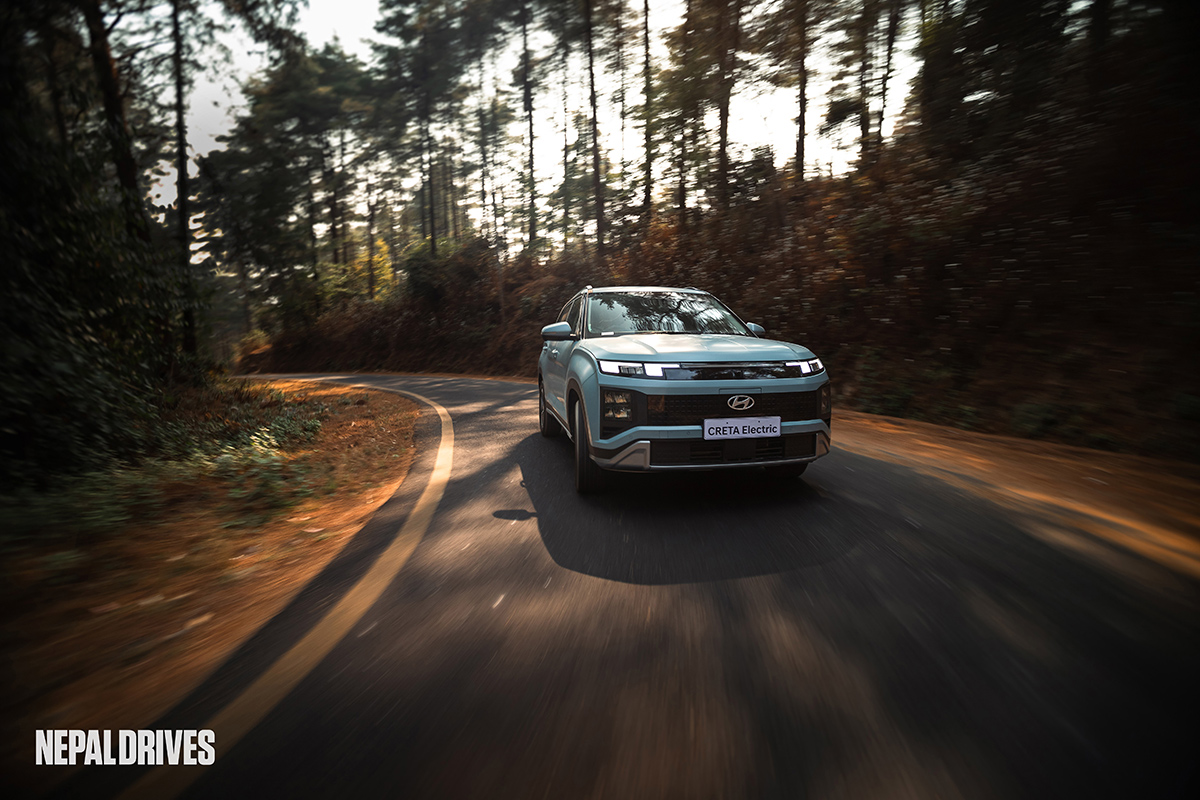
The motor produces 138 bhp and 255 Nm of torque, which is more than enough for city use and the occasional highway trip. It’s not built for speed, but the drive feels smooth, relaxed, and confidence-inspiring.
Acceleration is linear, throttle response is refined, and thanks to solid insulation, the cabin remains quiet even over rough roads. The suspension, adapted from the ICE Creta, feels well-tuned and composed, soaking up bumps with ease.
You also get multiple levels of regenerative braking, including a one-pedal driving mode that works great in traffic. It won’t excite performance enthusiasts, but for everyday commuting, it performs reliably.
PRACTICALITY AND PEACE OF MIND
One of the Creta Electric’s biggest advantages is the aftersales support that comes with it. Hyundai, through Laxmi Intercontinental, has built a strong reputation in Nepal. Many owners report never having to leave their cars at the workshop for more than a day or two.
That makes a big difference when compared to newer Chinese EV brands that haven’t had time to prove their commitment. And because the electric Creta shares many components with its petrol-powered sibling, there’s added reassurance about parts availability and serviceability.
The battery, rated IP67 for water and dust resistance, comes with an 8-year or 160,000 km warranty, which adds another layer of confidence.
VERDICT
The Creta Electric is priced between Rs. 51.96 lakh and Rs. 59.96 lakh. That puts it right in the crosshairs of several Chinese EVs that boast bigger screens, more range, and even ADAS. On paper, the competition might look stronger. But Hyundai’s edge is not in the spec sheet—it’s in the trust it has earned over the years.
For buyers who’ve been burned by unreliable aftersales service, or who are simply looking for a smoother ownership experience, that peace of mind can be worth more than a longer feature list. This is especially true for older buyers who value familiarity and reliability more than cutting-edge tech.
Still, it’s worth noting that Chinese EVs are getting better quickly. They’re no longer what they used to be, and as public perception shifts, the gap is closing. Whether the Creta Electric can continue to command its premium as the competition evolves is something we’ll have to wait and see.
The Hyundai Creta Electric doesn’t try to dazzle you with futuristic tech. Instead, it offers something more meaningful—it makes you feel at ease. In a market where flash often overshadows function, the Creta’s calm, capable, and familiar approach is refreshing. And when you’re spending this kind of money, sometimes peace of mind is the most important feature of all.


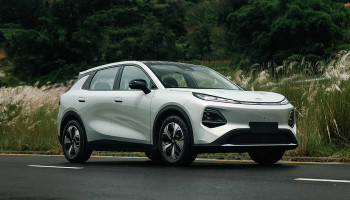
Changan Nevo Q05: Makes Sense
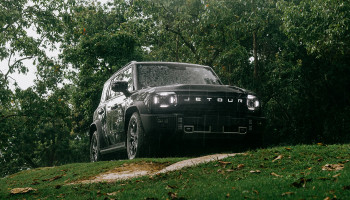
Jetour T2: Ready 2 Rumble
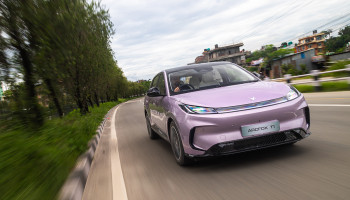
Arcfox T1: Into The Thick of It