EV Tax Structure in Nepal Shifted from Motor Power to Vehicle Price

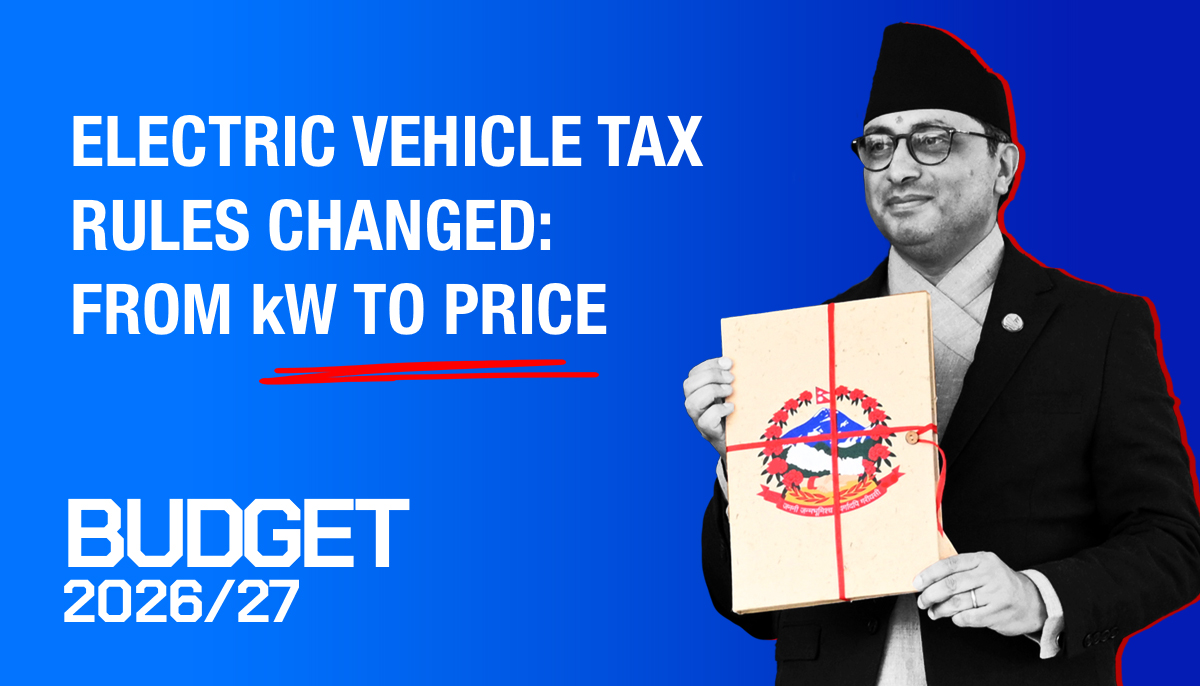
Finance Minister Dr. Swornim Wagle, while presenting the national budget for fiscal year 2026–27 in the federal parliament, announced that the government has overhauled the taxation system for electric vehicles, replacing the existing motor power (kilowatt)-based structure with a price-based framework.
Previously, EV taxes were applied under a tiered system based on motor capacity, with slabs ranging from 0–50 kW, 51–100 kW, 101–200 kW, 201–300 kW, and above 300 kW.
Under the revised taxation framework, electric vehicles will now be taxed primarily on the basis of their declared CIF (Cost, Insurance and Freight) value at customs, marking a significant shift away from the earlier system that relied heavily on peak motor power output.

He stated, “I have arranged for customs duties on electric vehicles, which were previously based on peak power capacity, to now be levied on a value-based system. In addition, a clean infrastructure investment fee has been introduced at the point of import to support domestic production of such vehicles, as well as the development of charging stations and battery management systems.”
The change comes after years of debate over the effectiveness of the kW-based classification system. The Office of the Auditor General had previously raised concerns about inconsistencies in the framework and recommended establishing clearer standards for measuring motor capacity, along with exploring alternative approaches such as value-based taxation.
In a similar line of feedback, both the Department of Transport Management and the Department of Customs had suggested adopting a system based on vehicle price and size, arguing it would improve transparency and create a more practical tax structure.
With the new approach, the overall value of the vehicle entering the country will play a larger role in determining the applicable tax bracket, meaning higher-priced EVs are expected to attract greater tax liability regardless of motor performance alone
Omoda Jaecoo Continues Nepal Premier League Partnership for 2026
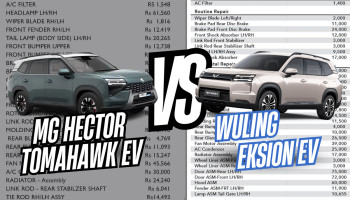
Same Same, But Different: MG and Wuling's EV Battle