China’s AI-Led Manufacturing Push Offers Lessons for Emerging Markets



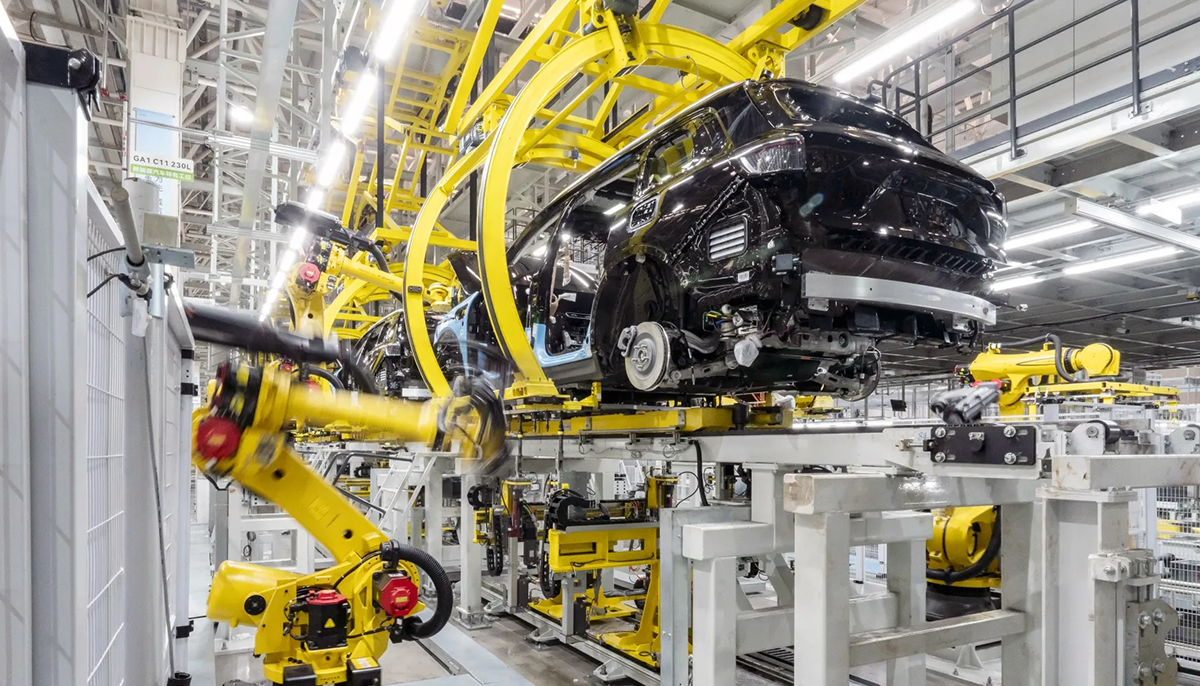
China’s manufacturing transformation is often framed through scale, but the more instructive story lies in how technology, partnerships, and policy intersect. A strong example is Seres, whose AI-integrated production facility in Chongqingreflects the direction modern automotive manufacturing is heading.
Through its collaboration with Huawei, Seres has split responsibilities in a way that mirrors a broader industry shift—hardware and software evolving in parallel.

While Seres handles vehicle manufacturing, Huawei provides digital architecture, including intelligent cockpits and driver assistance systems. This kind of partnership is becoming increasingly common as vehicles transition into software-defined platforms.

Inside the factory, automation is extensive. Thousands of robots handle repetitive tasks such as welding and painting, while AI-driven systems monitor production through real-time simulations.
Quality control, in particular, has seen significant change. Machine vision systems inspect components like underbody fittings within seconds, reducing dependency on manual checks and minimizing production delays.

However, the relevance of Seres’ approach goes beyond robotics or AI itself. The real takeaway is integration—between systems, suppliers, and policy support.
Seres’ operations are closely linked with its supply chain. Key suppliers operate within or near the production ecosystem, while others are digitally connected, enabling real-time coordination. This reduces inefficiencies and aligns with global manufacturing trends where supply chains are no longer external dependencies but embedded components of production strategy.
Just as importantly, this level of integration does not exist in isolation. It is supported by a broader industrial framework in China, where regional governments actively enable innovation through infrastructure, incentives, and long-term planning. Without that layer, even the most advanced factory would struggle to operate at this level of efficiency.
For Nepal, this is where the distinction becomes critical.
It is easy to interpret examples like Seres as a signal to pursue large-scale “AI factories.” But Nepal’s manufacturing landscape operates under entirely different constraints—limited industrial clustering, fragmented supply chains, and minimal policy alignment around technology adoption.
The more realistic takeaway is not replication, but adaptation. Instead of aiming for full automation, Nepal can focus on selective integration—introducing AI-led quality checks in assembly processes, digitizing inventory and supplier coordination, and gradually building data-driven manufacturing workflows. These are incremental steps, but they address real inefficiencies without requiring massive capital investment.
Policy will ultimately determine whether such transitions scale. Without targeted incentives, industry-wide standards, or pilot programs, adoption will remain isolated. The Seres example works not just because of technology, but because it operates within a system designed to support it.
There is also a structural lesson in partnerships. The Seres–Huawei model highlights how collaboration can accelerate capability building. For Nepal, fostering similar partnerships—whether with technology providers or regional manufacturing players—could help bridge capability gaps faster than building everything in-house.
In that sense, Seres is less a blueprint and more a case study in alignment.
It shows what becomes possible when manufacturing, technology, and policy move in the same direction. For Nepal, the opportunity lies not in chasing scale, but in building the foundations that make such integration viable over time.








GWM Ora 5, Tank 300 Win International Awards at TADA 2026
New IM LS6 Revealed in China With Chassis and Cabin Upgrades

China’s August EV Best-Sellers Include Several Models Sold in Nepal